
Aadhaar card should be used only for identification: Supreme Court seeks response from Centre and states

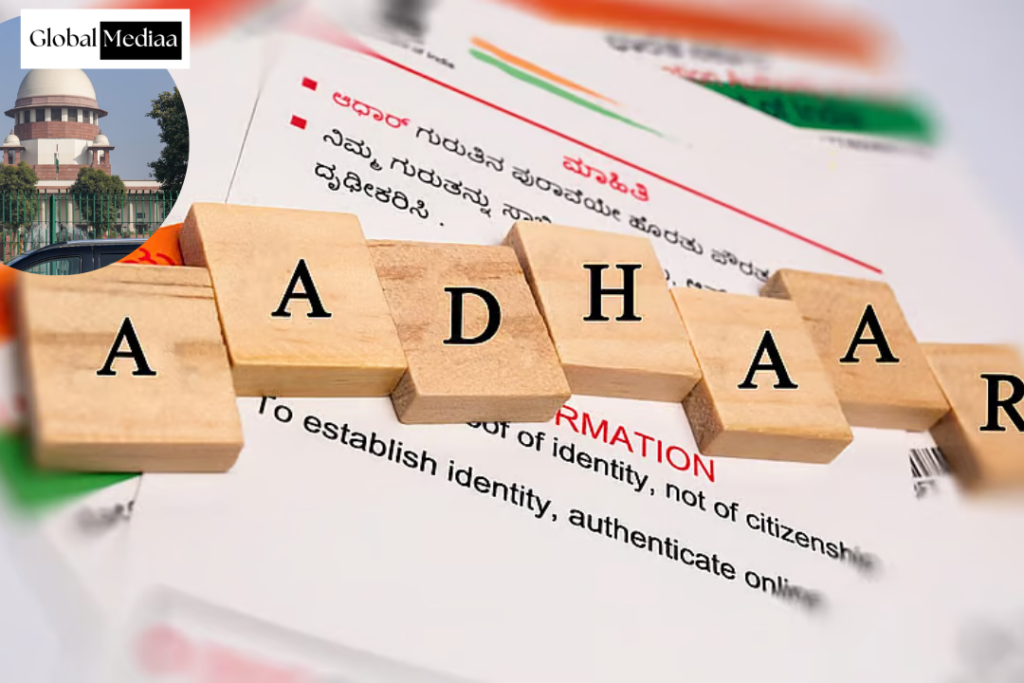
The Supreme Court on Tuesday sought response from the Centre and states on a plea alleging that Aadhaar card is being wrongly used as proof of citizenship, domicile and address. The petition sought directions to limit its use to identity verification only.
A bench of CJI Surya Kant and Justice V. Mohana issued notice to the Centre, all states and Union Territories on the plea of advocate Ashwini Kumar Upadhyay.
The petition sought directions to the Centre, states, and the Election Commission to ensure that Aadhaar is used only as proof of identity, and not as proof of citizenship, domicile, address, or date of birth.
Section 9 of the Aadhaar Act clearly states that Aadhaar is not proof of citizenship or domicile.
The UIDAI notification dated August 22, 2023 also clarified that Aadhaar is only a proof of identity and not of citizenship, address or date of birth.
Other documents are becoming easier for infiltrators and illegal immigrants to obtain.
Aadhaar is being used as proof of age, citizenship, and residence in processes such as school admissions, property purchases, birth certificates, ration cards, and driver’s licenses. The petition claims that this is why infiltrators and illegal immigrants are also obtaining other documents based on Aadhaar.
Voter Registration Verification Questioned
The petitioner also raises questions about the voter registration verification process. According to the petition, the verification of documents under Form-6 is not sufficient and due to this, names of those people may also be included in the voters list who do not have the required valid documents.
The petition calls for comprehensive reforms in the verification framework used in the electoral process. It also suggests the formation of a high-level monitoring committee comprising retired Supreme Court judges, cybersecurity experts, and forensic experts.
In 2018, the Supreme Court declared Aadhaar valid, but with limitations.
The Supreme Court delivered a historic verdict on September 26, 2018. By a 4:1 majority, the court upheld the Aadhaar Act as constitutional, but struck down some provisions.
The court stated that linking Aadhaar with bank accounts and mobile SIM cards is not mandatory. Aadhaar is not mandatory for school admission. But the use of Aadhaar in government subsidies and welfare schemes is legal.
Learn what the Aadhaar Act is.
The Aadhaar (Targeted Delivery of Financial and Other Subsidies, Benefits and Services) Act, 2016, is the law that sets out the legal framework for the issuance of Aadhaar numbers, their use, data security, and the functioning of the UIDAI. This law came into effect on March 26, 2016. The Act clarifies that Aadhaar is not proof of citizenship. Aadhaar only indicates that a person is a resident of India.
The Supreme Court has taken cognizance of the misuse of Aadhaar in voter cards and other documents. The petition filed in the Supreme Court has sought directions to the Centre, states and the Election Commission to take appropriate steps to ensure that Aadhaar is used only as proof of identity. The next hearing in this case will be on August 7th.
New Delhi: The Supreme Court on Tuesday agreed to entertain a PIL seeking directions to the central government, all states and union territories and the Election Commission of India to ensure that Aadhaar is used only as proof of identity and not as proof of citizenship, residence, address or date of birth. A bench of Chief Justice of India Surya Kant and Justice V. Mohana issued notice to the Central Government, all State Governments and Union Territories, ECI and Unique Identification Authority of India (UIDAI) on a petition filed by advocate Ashwini Kumar Upadhyay.
What Section 9 of the Aadhaar Act, 2016 mentions
The petition states that Section 9 of the Aadhaar Act, 2016 clearly states that Aadhaar is not proof of citizenship or residence, while UIDAI notifications clearly state that Aadhaar is only proof of identity and not proof of citizenship, address, or date of birth. According to the petition, despite these legal limitations and court rulings that Aadhaar is not proof of age, the document has been widely accepted as proof of age, residence, citizenship and domicile for various purposes such as school admission, property transactions, issuance of birth certificates, ration cards and driving licences.

Challenge to the use of Aadhaar as proof of date of birth and residence
The PIL specifically challenges the use of Aadhaar as proof of date of birth and residence in the application form for new voter registration (Form 6). It has been argued that such use is against the provisions of the Aadhaar Act, UIDAI information and the Representation of the People Act. Petitioner Ashwini Kumar Upadhyay has sought directions to the Central Government, States and the ECI to take appropriate steps to ensure that Aadhaar is used strictly as a proof of identity and not for purposes prohibited under the Aadhaar Act and UIDAI guidelines.
Foreign nationals staying for 182 days are also entitled to Aadhaar.
Citing the Aadhaar enrolment framework, the petition argues that all residents, including foreign nationals staying in India for at least 182 days, are entitled to Aadhaar. It further states that Aadhaar enrollment can be done through Common Service Centers and supporting documents such as rent agreements or certificates issued by local authorities. The petition claims that alleged infiltrators and illegal migrants obtain Aadhaar cards through weak verification system and later use the Aadhaar to obtain other identity and entitlement documents like ration cards, birth certificates, residence certificates, driving licences and voter ID cards.
Concerns about misuse of Aadhaar
According to the petitioner, this process undermines the credibility of the identification framework created under the Aadhaar Act and allows ineligible people to avail of subsidies, welfare schemes, and other benefits meant for legitimate beneficiaries. The petition states that such processes lead to misuse of government resources, deprive genuine beneficiaries of benefits, and violate constitutional principles such as equality, fairness, and targeted distribution of welfare schemes. The petitioner said the matter arose after concerns were raised about alleged misuse of Aadhaar beyond its statutory purpose, despite the Aadhaar Act and UIDAI notifications repeatedly clarifying that its value as evidence was limited.
For more such information, connect with us today: : www.globalmediaa.com