Buffett Won’t Be Center Stage at Berkshire’s Annual Meeting—But His Latest Stock Moves Still Will Be
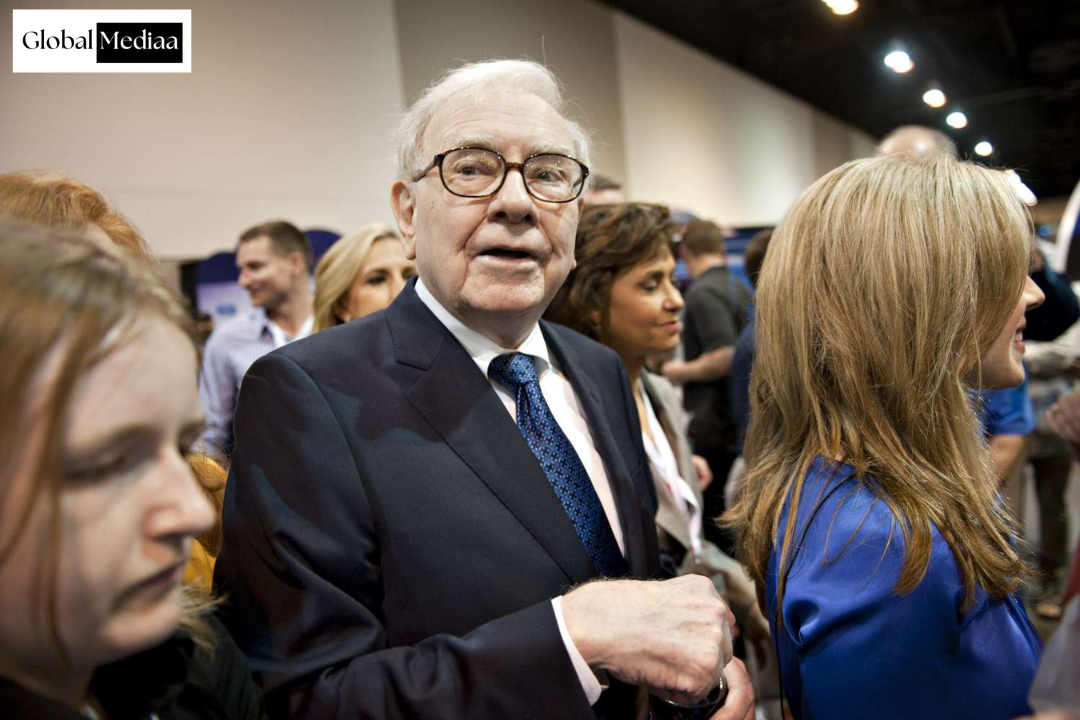
For the first time in six decades, Warren Buffett will not be center stage for Berkshire Hathaway’s (BRK.A, BRK.B) annual meeting. His recent stock moves could still dominate investor discussions this Saturday.
The 95-year-old stepped down as CEO at the beginning of this year, handing the role to Greg Abel. But Buffett surprised many last month by revealing in a CNBC interview that he’s still steering many of the company’s investment decisions.
Buffett also said he’s made “one tiny purchase” that he declined to name.
At Saturday’s meeting, Buffett will sit on the arena floor with the rest of the board while Abel handles two stakeholder Q&A sessions for the first time—one with Ajit Jain, vice chair of insurance operations, and the second with BNSF Railway CEO Katie Farmer and NetJets CEO Adam Johnson. 1 2 While Buffett has handled over the microphone, the routine he described in a late-March interview, along with other recent Berkshire moves, suggests the Oracle of Omaha still manages much of Berkshire’s portfolio. 3 He told CNBC he goes to the office every day and calls Mark Millard, Berkshire’s director of financial assets, each morning before the market opens, responding to premarket activity and adjusting limit orders. Millard keeps him updated hourly with a sheet of the day’s trades. Abel sees the trades later and has the final word. “I won’t make anyone that Greg thinks are wrong,” said Buffett.
Before stepping down, Buffett ran about 90% of Berkshire’s equity portfolio, with Todd Combs and Ted Weschler dividing the rest. Combs left for JPMorgan Chase (JPM) in December. Abel now formally oversees 94% of it, with Weschler handling the other 6%.
Berkshire doesn’t say who directed specific trades, but analysts work from a rule of thumb: larger, value-oriented positions are Buffett‘s; smaller and tech-leaning ones come from Abel and Weschler.
By that read, the trades widely attributed to Buffett in his final quarter as CEO fit his long-standing taste for sustainable cash-flow businesses at prices he can defend: 3 million more shares of Chubb (CB), a Chevron (CVX) position raised to 130 million shares, and a $352 million stake in the New York Times Company (NYT).
So, too, does the list of businesses Abel said in his annual shareholder letter in February will continue as long-term investments for the company: Apple (AAPL), American Express (AXP), Coca-Cola (KO) and Moody’s (MCO).
Berkshire’s movements this year also fit with him weighing in on the big calls. In March, National Indemnity, Berkshire’s reinsurance subsidiary, took a $1.8 billion stake in Japanese insurer Tokio Marine Holdings (with rights to grow the position to about 10%).
Berkshire has also continued to add to the massive cash pile Buffett built in recent years.
The company ended 2025 with more than $373 billion in cash and Treasury bills, and Buffett told CNBC the company purchased another $17 billion in T-bills in late March.
Some of that record-setting cash heap was used in March for Berkshire’s first share buyback in nearly two years—a $226 million repurchase that could signal Buffett sees Berkshire’s shares as undervalued.
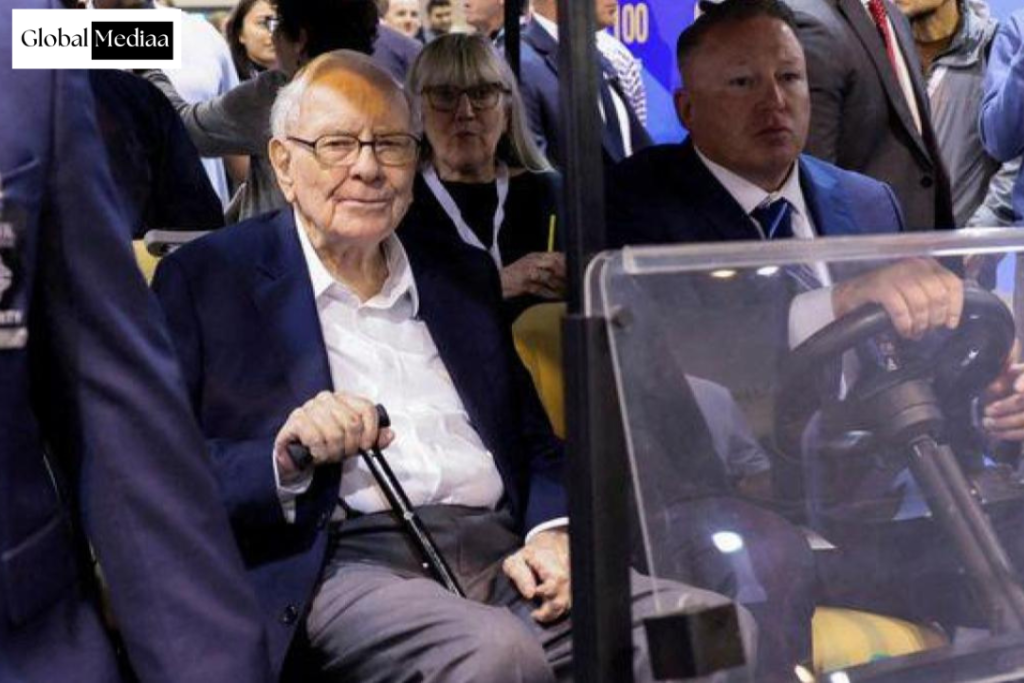
Saturday will give shareholders more information, as investors get their first sustained look at Abel running a Buffett-style Q&A. More revealing may be Berkshire’s first-quarter 13F filing May 15, which could shed light on how much Buffett is directing the company’s trades.
For six decades,
Warren Buffett wrote a letter to Berkshire Hathaway shareholders before the company’s yearly gathering in Omaha. On May 2, tens of thousands of investors will file into that same arena, but for the first time in the company’s history, the 95-year-old will not be sitting in the CEO’s chair.
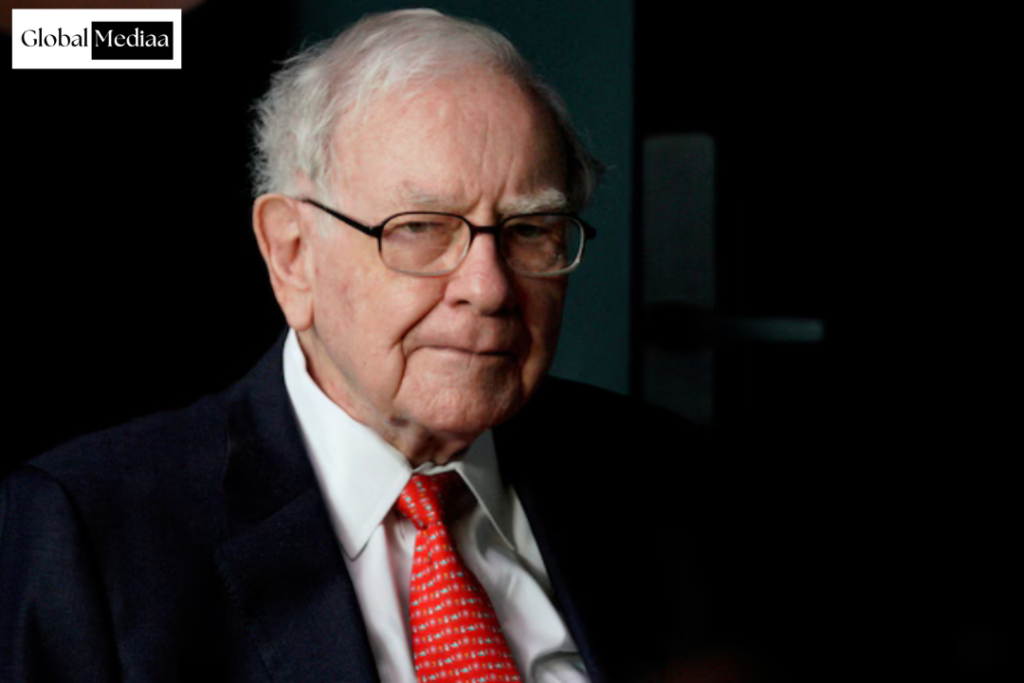
Buffett stepped down as chief executive at the end of last year and is not scheduled to speak at this year’s meeting, according to Berkshire’s published agenda. He remains the company’s chairman and its largest shareholder, holding roughly 30% of the voting interest and 13.7% of the economic interest, as disclosed in the company’s 2026 proxy statement.
That silence makes his final letters to shareholders more than a historical read. The warnings inside them land with striking relevance in a market shaped by speculation, geopolitical disturbance, and the kind of frenzy Buffett spent his career cautioning against.
In his 2023 shareholder letter, Buffett devoted an entire passage to what he described as the market’s increasing resemblance to a gambling floor. Markets display far more speculative behavior than they did when he started investing, and the mechanisms feeding that speculation have moved directly into people’s homes, he wrote, according to Fortune.
Wall Street profits most not when clients build wealth but when trading volume spikes to frenzied levels, Buffett cautioned in that letter. Anything marketable during those periods of surplus will be marketed aggressively, not by everyone, but always by someone, he warned.
For whatever reasons, markets now exhibit far more casino-like behavior than they did when I was young,” said Warren Buffett, Former CEO of Berkshire Hathaway.
That observation,
written well before prediction markets began shaping Wall Street sentiment, reads like a direct assessment of the current landscape. His successor, Greg Abel, recognized the gravity of what he inherited in his own first letter to shareholders in February 2026.
Buffett is arguably the greatest investor of all time, with generations benefiting from his investment acumen, Abel wrote, as reported by Fortune. Abel disclosed that Buffett objected to the praise but admitted that everyone knows it to be true.
For more such information, connect with us today: : www.globalmediaa.com