Five IAF personnel killed in AN-32 aircraft crash in Assam’s Jorhat
A court of inquiry is being constituted to ascertain the cause of the accident, the IAF says
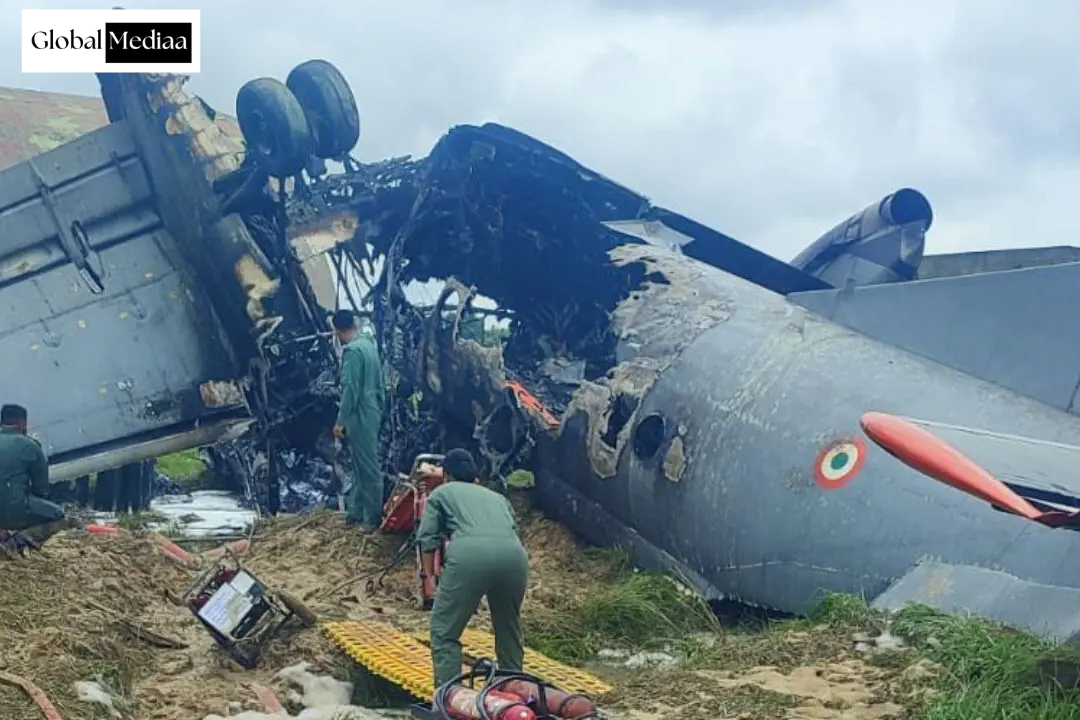
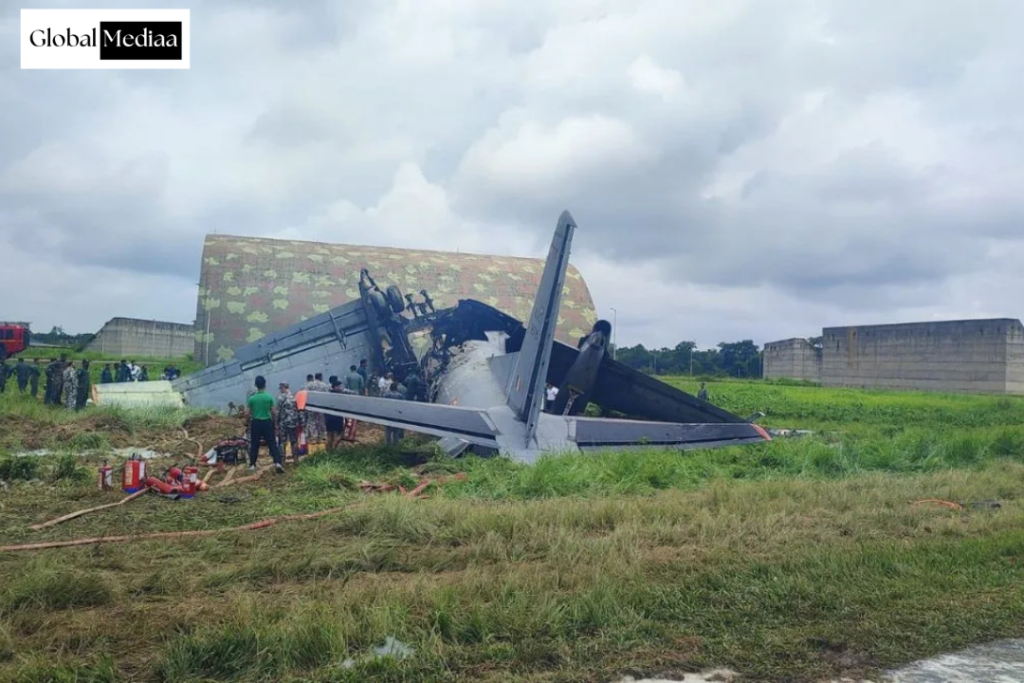
An AN-32 aircraft of the Indian Air Force (IAF) met with an crash while landing in Assam’s Jorhat district on Saturday (June 13, 2026), the force said. Five personnel were killed in the crash.
The Indian Air Force (IAF)
has confirmed the loss of five personnel in the AN-32 aircraft accident at its Jorhat airbase in Assam and said a court of investigation has been ordered to determine the cause of the crash on Saturday.
The aircraft met with an accident during a routine sortie at around 10 am, th IAF said. The incident occurred while the aircraft, AN-32, belonging to 43 Squadron, carrying cargo, was landing at the IAF’s airbase in the Rowrahia area.
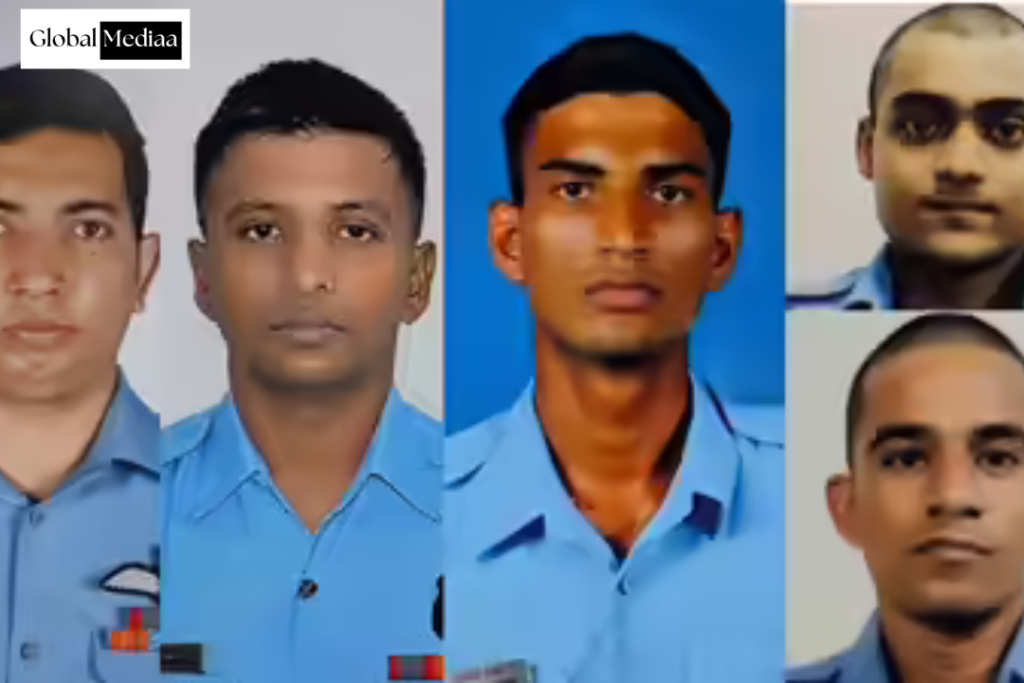
The deceased personnel are Squadron Leader Prashant Singh, Flight Lieutenant Shubham Kumar, Sergeant Jitendra Sharma, Agniveer Vayu Khemaram Kumawat and Agniveer Vayu Danish Alam.
Emergency response teams, including firefighting units, were deployed at the site immediately after the incident.
In an official statement on X, the IAF said, “The Indian Air Force (IAF) deeply regrets the loss of five personnel in the An-32 accident at Jorhat, Assam.
Sqn Ldr Prashant Singh, Flt Lt Shubham Kumar, Sgt Jitendra Sharma, Agniveervayu Khemaram Kumawat and Agniveervayu Danish Alam made the supreme sacrifice in the line of duty.
IAF extends its deepest condolences to the bereaved families and stands firmly with them in this hour of grief.”
IAF had ordered a court of inquiry after the transport aircraft met with the accident.
Confirming the development, the IAF said in a post on X, “An IAF An-32 aircraft met with an accident today while landing at Jorhat. A court of inquiry is being constituted, to ascertain the cause of the accident.”
Eyewitnesses said a loud explosion was heard, and the area was engulfed in smoke.
The latest crash comes just months after an Indian Air Force Sukhoi Su-30MKI fighter jet crashed in Assam’s Karbi Anglong district, killing both pilots on board.
The twin-seat fighter aircraft had taken off on March 5 for a routine sortie from the Jorhat Air Force Station before losing touch with ground control at around 7.42 pm. The aircraft subsequently crashed in a remote hilly area of Karbi Anglong, about 60 km from Jorhat, officials had said.
What is AN-32?
The Antonov AN-32 is a twin-engine turboprop military transport aircraft that has long been a mainstay of the Indian Air Force’s transportation fleet. Developed in the former Soviet Union to meet India’s operational needs, the aircraft is designed to operate in challenging conditions, including high-altitude airfields and hot tropical environments.
Capable of carrying up to 7.5 tons of cargo, around 50 passengers or 42 paratroopers, the AN-32 is widely used for troop movement, logistics support and supply missions to remote and difficult-to-access areas.
New Delhi,
June 13 (PTI) An AN-32 aircraft of the IAF met with an accident while landing in Assam‘s Jorhat district on Saturday, the force said, adding that a court of inquiry is being constituted to ascertain its cause.
An IAF An-32 aircraft met with an accident today while landing at Jorhat. “A court of inquiry is being constituted to ascertain the cause of the accident,” it said.
Earlier in the day, a defense spokesman said the aircraft crashed while landing in Assam’s Jorhat district.
The incident occurred while the aircraft was landing at the IAF’s airbase in the Rowriah area. Senior IAF officials have rushed to the area, and casualty, if any, is yet to be ascertained, the spokesperson said. PTI KND PRK
This report is auto-generated from PTI news service. ThePrint holds no responsibility for its content.
NEW DELHI:
Five Indian Air Force personnel were killed after an AN-32 transport aircraft crashed while attempting to land at the Jorhat air base in Assam on Saturday, according to authorities.
The co-pilot survived the accident and is undergoing treatment, IAF officials told news agency.
Despite the introduction of the C-130J Super Hercules and C-17 Globemaster III fleets, the An-32 continues to shoulder a substantial share of the Air Force’s day-to-day logistics requirements.
NEW DELHI:
Five Indian Air Force personnel were killed and a co-pilot injured when an An-32 transport plane crashed while landing at Air Force Station Jorhat in Assam on Saturday morning. The aircraft, on a routine sortie, went down around 10 am at the Rowriah airbase and caught fire.
The personnel killed were Squadron Leader Prashant Singh, Flight Lieutenant Shubham Kumar, Sergeant Jitendra Sharma, Agniveervayu Khemaram Kumawat and Agniveervayu Danish Alam.
A court of investigation has been ordered to ascertain the cause of the accident.
The accident has once again drawn attention to the An-32 fleet, which remains one of the Indian Air Force’s most important transport assets despite being more than four decades old.
India purchased 125 An-32 aircraft between 1984 and 1991. The twin-engine transport aircraft is capable of carrying up to 6.7 tonnes of cargo or 50 paratroopers and is designed to operate from short runways and high-altitude airfields.
The aircraft regularly ferries troops, ammunition, engineering stores and rations to advanced landing grounds that remain inaccessible by road for significant parts of the year.
The fleet assumed added significance after the 2020 military standoff with China in eastern Ladakh, when the armed forces undertaken one of the largest sustained troop deployments along the Line of Actual Control in decades.
In a parliamentary reply in early 2024,
Defense Minister Rajnath Singh said a significant portion of the fleet had already been upgraded, while the remainder was being overhauled domestically. The oldest airframes are expected to begin retirement from around 2032, while upgraded aircraft could remain in service until 2037–2040.
The induction of 56 Airbus C-295 aircraft is ongoing to replace the IAF’s aging Avro fleet under India’s first major private-sector military aircraft manufacturing programme. While 16 aircraft are being delivered from Spain in flyaway condition, the remaining 40 are being manufactured by Tata Advanced Systems in Vadodara, with the first indigenously assembled aircraft expected to roll out in September 2026.
The C-295 is expected to gradually absorb a portion of the missions currently undertaken by the An-32 as the fleet expands, although it is primarily intended to replace the Avro aircraft.
For the larger medium-lift requirement, the program that most directly addresses the eventual replacement of the An-32 has moved through its early bureaucratic stages. The DAC cleared the acquisition of 60 Medium Transportation Aircraft in March this year.
The program will follow the Buy and Make route, with 12 aircraft to be delivered in flyaway condition and 48 fabricated in India at an estimated cost of around Rs 1 lakh crore. The MTA is intended to replace the aging An-32 and Il-76 fleets while enhancing both strategic and tactical air capliftability.
The proposal must still progress through the RFP (Request for Proposal) stage, followed by competitive assessment, commercial negotiations and final approval by the Cabinet Committee on Security before a contract can be signed.
The formal RFP is expected to be issued later this year. The principal contenders are Lockheed Martin’s C-130J Super Hercules, Embraer’s C-390 Millennium and Airbus’ A400M Atlas.
The C-130J sits at the lower end of the payload requirement at around 19 tonnes, while the C-390 offers a payload of roughly 26 tonnes. The A400M, capable of carrying around 37 tonnes, exceeds the specified payload band but remains under consideration because of its wider capabilities.
For more such information, connect with us today: : www.globalmediaa.com