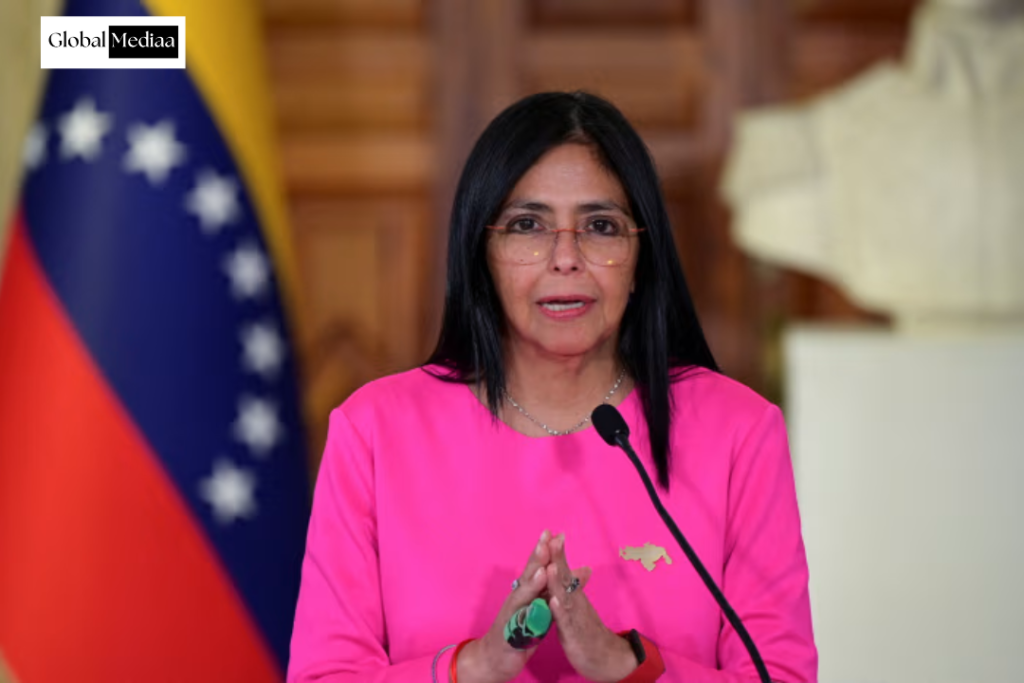
Who is Venezuelan Vice President Delcy Rodriguez, now leading the country?
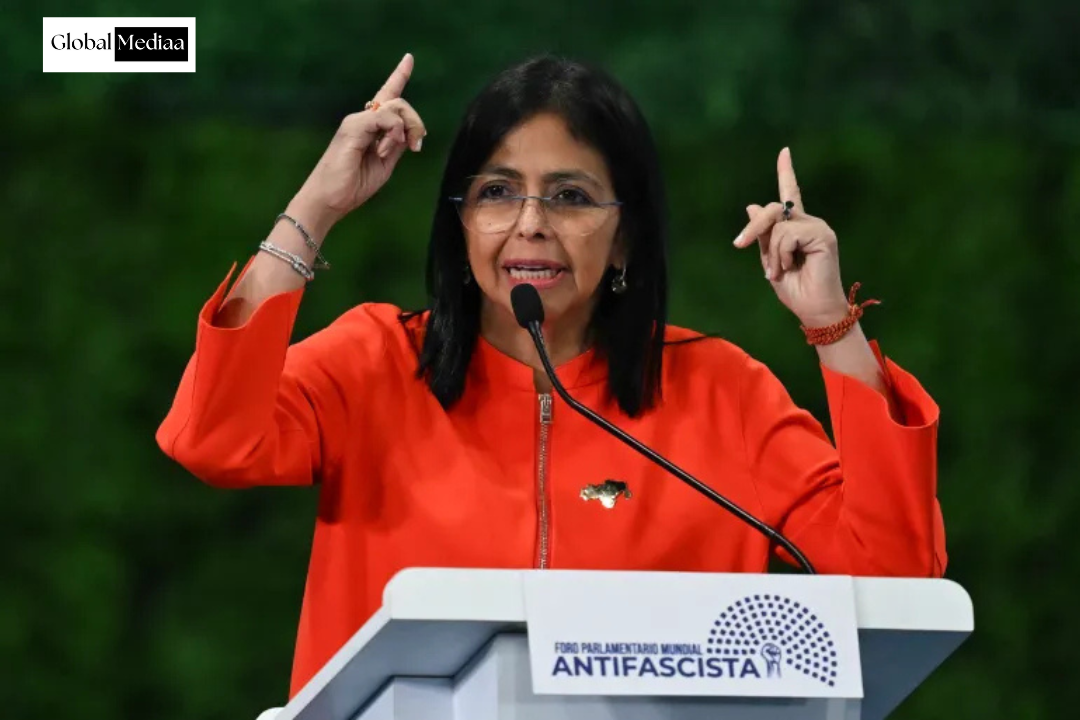
Rodriguez has a long history of representing the socialist ‘revolution’ of late President Hugo Chavez.
A brief power vacuum had emerged in Venezuela in the sudden chaos and confusion following the abduction of President Nicolas Maduro by the United States.
But shortly after the US military rained down strikes on Caracas and other areas on Saturday, US President Donald Trump – in a surprise snub against Venezuelan opposition leader Maria Corina Machado, who was awarded last year’s Nobel Peace Prize – noted that Vice President Delcy Rodriguez, 56, had been sworn in as interim president.
The right-wing Machado
The right-wing Machado – who had cozied up to Trump, especially after her October Nobel win, an honor that he himself coveted and she dedicated to him – was described by the US president as not having enough support or “respect” to be Venezuela‘s leader.
Trump said Rodriguez had talked to US Secretary of State Marco Rubio and was “essentially willing to do what we think is necessary to make Venezuela great again”.
“I think she was quite gracious,” Trump added. “We can’t take a chance that someone else takes over Venezuela that doesn’t have the good of the Venezuelan people in mind.
However, Rodríguez’s remarks soon after the strikes and abduction were diametrical: She criticized the US military action as “brutal aggression” and called for Maduro’s immediate release.
“There is only one president in this country, and his name is Nicolas Maduro,” Rodriguez said defiantly on state television as she was flanked by top civilian officials and military commanders.
Who, then, is the present acting president of Venezuela?
Revolutionary roots
A Caracas native, Rodriguez was born on May 18, 1969. She is the daughter of left-wing rebel fighter Jorge Antonio Rodriguez, who founded the Socialist League party in the 1970s.[1] Her father was killed while tortured in police custody in 1976, a crime that shook many activists of the era, including a young Maduro.
Rodríguez’s brother, also named Jorge, also holds a key role in government as the head of the National Assembly.
She is an attorney who graduated from the Central University of Venezuela and rose quickly through the political ranks in the past decade. Rodríguez has a long history of representing on the world stage what late President Hugo Chávez called his socialist “revolution” with those carrying on his legacy referred to as Chavistas.
She served as communications and information minister from 2013 to 2014, foreign minister from 2014 to 2017 and as the head of a pro-government Constituent Assembly, which expanded Maduro’s powers, in 2017.
economic progress
Rodríguez is sometimes perceived as more moderate than many soldiers who took up arms with Chávez in the 1990s.
Rodriguez’s roles as finance and oil minister, held simultaneously with her vice presidential post, have made her a key figure in the management of Venezuela‘s economy and gained her major influence with the country’s withered private sector. She has applied orthodox economic policies in a bid to fight hyperinflation.
Maduro added the oil ministry to Rodriguez’s portfolio in August 2024, tasking her with managing escalating US sanctions on Venezuela’s most important industry.
“This high profile within the government is what has probably made the negotiation attractive to the United States,” Caracas-based journalist Sleither Fernandez told Al Jazeera.
Rodríguez developed strong ties with Republicans in the US oil industry and on Wall Street who balked at the notion of a US-led change in Venezuela’s government.
Among her past interlopers were Blackwater security company founder Erik Prince and, more recently, Richard Grenell, a Trump special envoy who tried to negotiate a deal with Maduro for greater US influence in Venezuela.
Despite being perceived as more moderate, Maduro has called Rodríguez a “tiger” for her die-hard defense of his socialist government.
When she was named vice president in June 2018, Maduro described her as “a young woman, brave, seasoned, daughter of a martyr, revolutionary and tested in a thousand battles”.
After Maduro’s abduction on Saturday, Rodríguez demanded the US government provide proof of life for Maduro and his wife, Cilia Flores, and minced no words in denouncing the US actions.
“We call on the peoples of the great homeland to remain united because what was done to Venezuela can be done to anyone. That brutal use of force to bend the will of the people can be carried out against any country,” she said in an address broadcast by the state television channel VTV.
A brief power vacuum had emerged in Venezuela in the sudden chaos and confusion following the abduction of President Nicolas Maduro by the United States.
But shortly after the US military rained down strikes on Caracas and other areas on Saturday, US President Donald Trump – in a surprise snub against Venezuelan opposition leader Maria Corina Machado, who was awarded last year’s Nobel Peace Prize – noted that Vice President Delcy Rodriguez, 56, had been sworn in as interim president.
US will judge Venezuela by actions not statements-Rubio
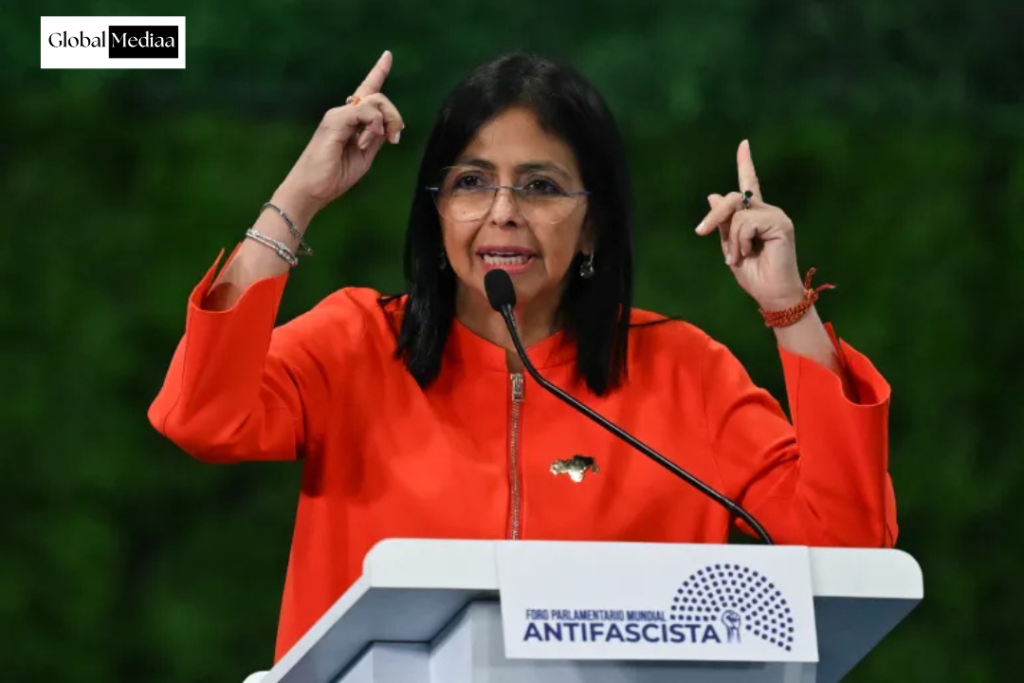
Asked about the statement made by Venezuela’s interim president Delcy Rodríguez, Secretary of State Marco Rubio says the US is not going to judge by what is said in statements, but rather by what operations are taken.
He says the US will respond based on what Venezuela does, asking if “drugs” will stop coming and if “migration patterns” will change.
He says those are amongst the issues America wants addressed, and they will be how the US judges the situation.
Does Rubio think Delcy Rodriguez is the legitimate President?
Rubio is asked if he thinks Interim President Delcy Rodriguez is now the legitimate president of Venezuela.
He says “this is not about the legitimate president” as the US does not believe the regime in place is legitimate.
Rubio says he understands there are people in Venezuela today “who are the ones who can actually make changes.”
He adds that “when we want to send in the migrant flights” the US had to deal with the people who controlled the airports in Venezuela and the people who had guns.
But he says this is different from acknowledging the legitimacy of Venezuela‘s government, which will come from a period of transition and an election.
For more such information, connect with us today: : www.globalmediaa.com