UAE falter after fluent start against South Africa
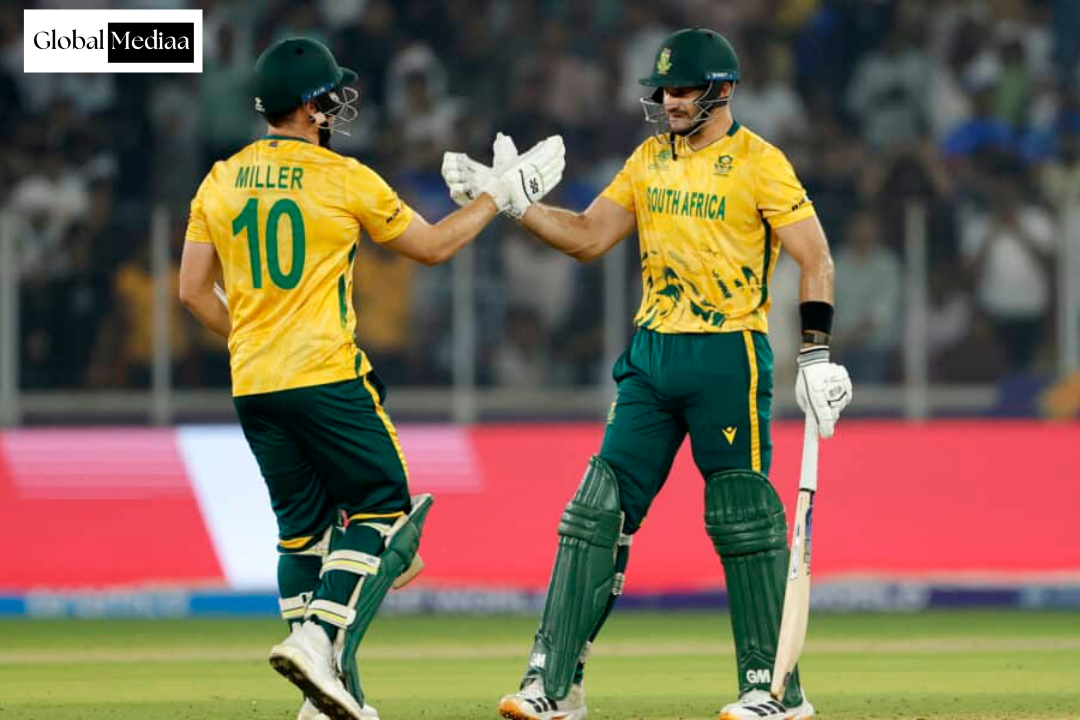
Unbeaten South Africa take on UAE to open proceedings on a day that could see the Super Eights spots confirmed at the T20 World Cup.
Broadcast details for Men’s T20 World Cup 2026
Another big day at the ICC Men’s T20 World Cup on Wednesday as the opening group stage gets closer to its completion.
The action begins in Delhi where unbeaten South Africa takes on UAE, before Pakistan looks to book their place in the Super Eights when they take on Namibia in Colombo.
The day finishes in Ahmedabad where India and the Netherlands lock horns in a clash that will not be easy for the defending champions.
South Africa v UAE
Scorecard
Put into bat, UAE looked fluent for the first four overs, but South Africa pegged them back with a pair of wickets. From 36/0 after four overs, UAE slipped to 44/2 at the end of powerplay, with openers Aryansh Sharma and Muhammad Waseem back in the pavilion.
After 10 overs, UAE are at 66/3. Pacer Corbin Bosch has led South Africa’s comeback with 2/4 in two overs.
UAE – Aryansh Sharma (wk), Muhammad Waseem (c), Alishan Sharafu, Sohaib Khan, Syed Haider, Muhammad Arfan, Dhruv Parashar, Muhammad Farooq, Haider Ali, Junaid Siddique, Muhammad Jawadullah
South African: Aiden Markram (c), Quinton de Kock (wk), Ryan Rickelton, Dewald Brevis, Tristan Stubbs, Jason Smith, George Linde, Corbin Bosch, Kagiso Rabada, Anrich Nortje, Kwena Maphaka
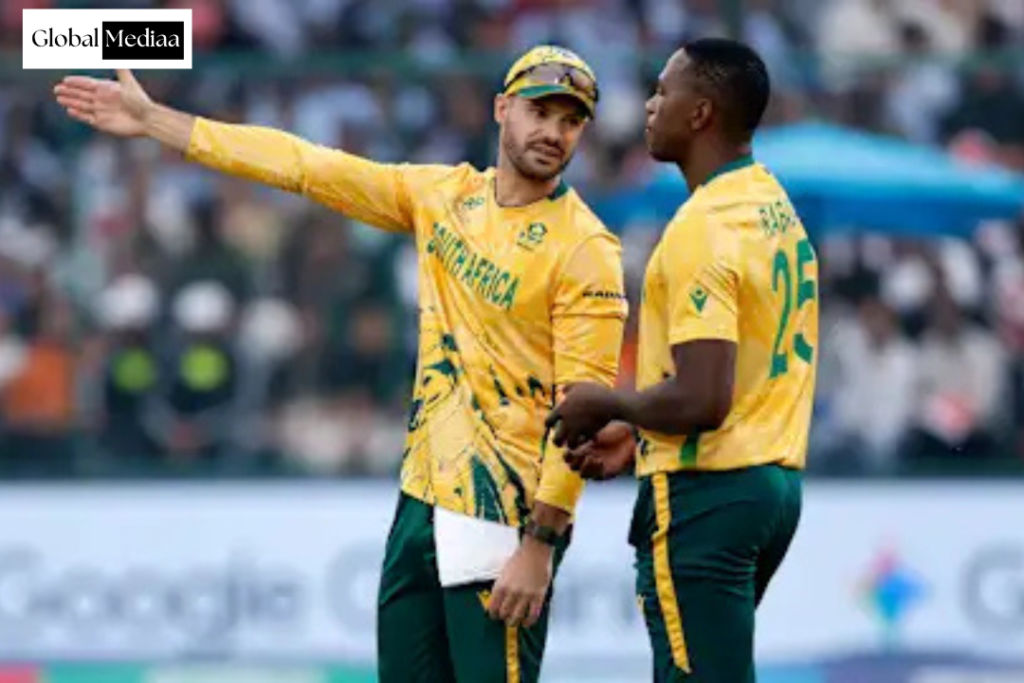
Toss South Africa chose to field vs UAE
South Africa have won the toss and elected to bowl first against UAE in their T20 World Cup 2026 match on which captain Aiden Markram called a tacky pitch in Delhi. UAE captain Muhammad Waseem said he wanted to bowl first as well
Weather also played a part in his decision – there was a drizzle just ten minutes before the toss, which forced parts of the soil to be covered.
Having already secured their place in the Super Eight, South Africa made four changes, fairly emptying out their bench, mainly giving their premier bowlers to rest. They brought in Jason Smith, Kwena Maphaka and Anrich Nortje for their first games of the tournament, and also brought back George Linde. They left out David Miller, Marco Jansen, Keshav Maharaj and Lungi Ngidi.
UAE made two changes too, for what will be their final appearance at this World Cup.
Dhruv Parashar and Muhammad Farooq were brought in by Syed Haider and Simranjeet Singh to “give the side more balance,” as Waseem put it.
In their Group D match of the ICC Men’s T20 World Cup 2026, the United Arab Emirates (UAE) started strongly but ultimately struggled after a promising start against a powerful South African bowling attack. After being put into bat in Delhi, the UAE openers looked comfortable and fluent early on, hitting a solid 36 without loss after the first four overs. However, South Africa quickly turned the momentum by claiming two early wickets, reducing UAE to 44/2 by the end of the powerplay and steadily applying pressure throughout the innings. Pacer Corbin Bosch has been particularly effective, taking key wickets and helping South Africa stem the flow of runs, while UAE’s score sat around 66/3 at the 10-over mark as regular breakthroughs harm their progress.
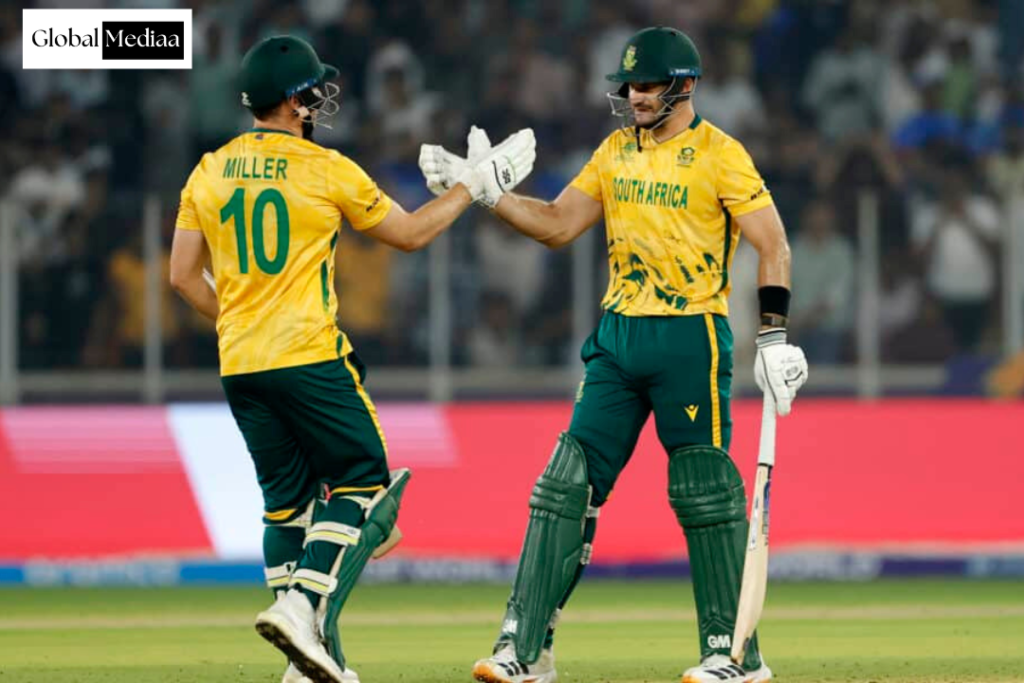
As the innings developed, UAE‘s middle order had difficult building partnerships against disciplined South African bowling. Despite some resistance from players like Alishan Sharafu, who contributed with the bat, frequent dismissals meant UAE were unable to convert their early momentum into a fully competitive one. By mid-innings, they were under pressure at around 98/4, with South African bowlers maintaining tight lines and exploiting any uncertainties in the UAE batting lineup.
South Africa, already assured of their Super Eight qualification, have approached the match with a mix of experience and strategic rotation, aiming to remain in rhythm while giving opportunities to squad members before the knockout stages. Their bowlers’ ability to regain control after an initial UAE flourish has been a key factor in keeping the associated nation’s score in check.
This performance highlights the competitive gap on the world stage between established cricketing powers and emerging teams, underscoring the learning experience UAE gains from matches against top-tier opposition like South Africa in the 2026 T20 World Cup.
Following their aggressive opening partnership, the United Arab Emirates national cricket team struggled to maintain momentum as the middle overs proved challenging against a disciplined South African attack. What initially seemed like a confident start quickly moved once South Africa tightened their lines and reduced scoring opportunities. The pressure of dot balls began to build, forcing UAE batters into risky shots that resulted in crucial dismissals.
South Africa’s bowling unit shown why they are considered one of the most balanced sides in the tournament. The South Africa national cricket team mixed pace variations with smart field placements, cutting off boundaries and forcing UAE to rely on singles. Fast bowlers kept consistent lengths, while the spinners controlled the middle phase effectively. Key breakthroughs from players like Corbin Bosch shifted the match decisively in South Africa’s favor.
Despite the setbacks, UAE’s batters tried to rebuild through short partnerships. Alishan Sharafu showed composure at the crease, trying to anchor the innings and rotate strike, but the lack of sustained support at the other end made it difficult to accelerate towards the death overs. The run rate slowed considerably compared to their explosive start in the powerplay.
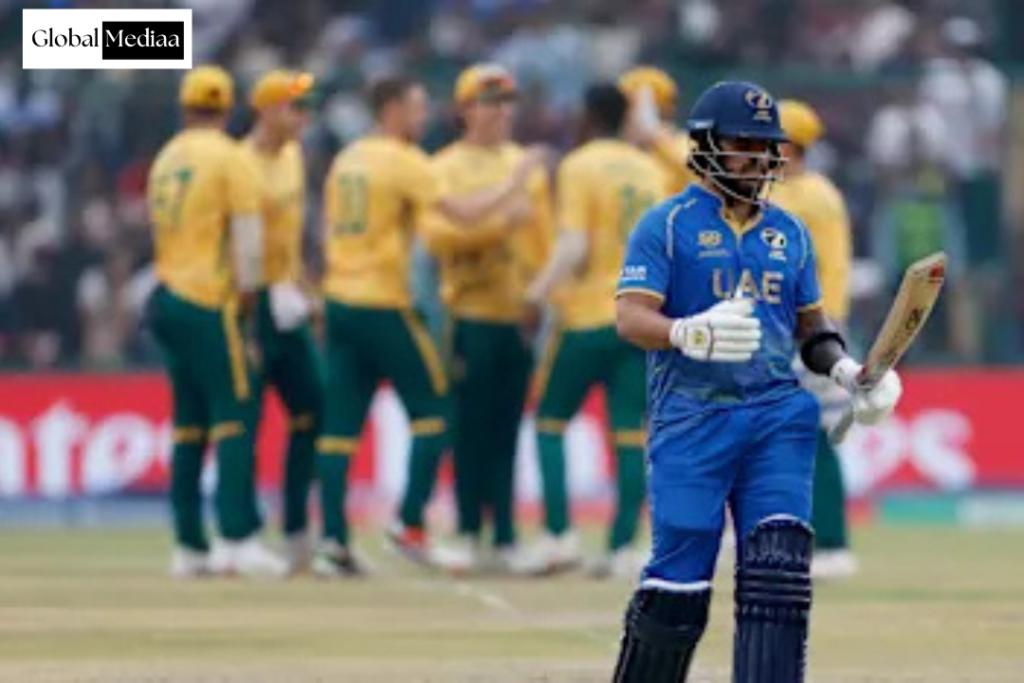
This match, part of the ICC Men’s T20 World Cup 2026,
highlights the challenging associate nations face when competing against established cricketing giants. While UAE demonstrated promise and confidence early on, South Africa’s experience and tactical discipline ultimately exposed the difference in depth and execution.
For more such information, connect with us today: : www.globalmediaa.com