Khaleda Zia: Bangladesh’s 1st Woman PM Who Had An India Connection
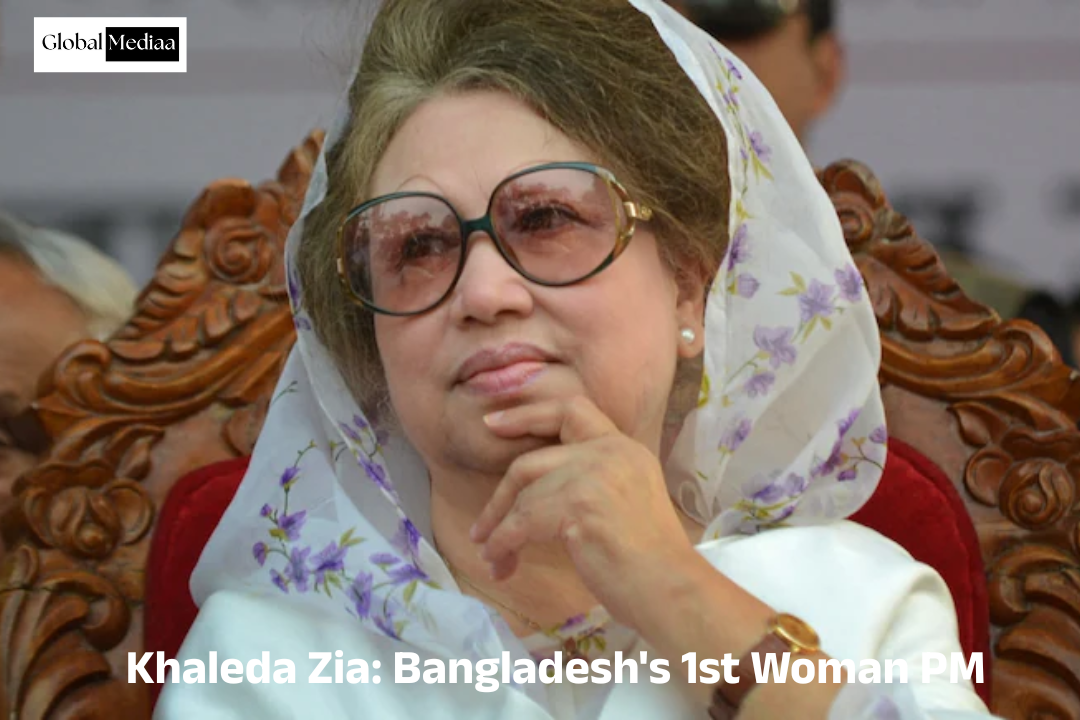
Khaleda Zia, Bangladesh’s first woman prime minister, died at the age of 80 on Tuesday following a prolonged illness, her Bangladesh Nationalist Party (BNP) said in a statement.
Khaleda Zia, Bangladesh’s first woman prime minister,
Khaleda Zia, Bangladesh’s first woman prime minister, died at the age of 80 on Tuesday following a prolonged illness, her Bangladesh Nationalist Party (BNP) said in a statement. Zia had been suffering from advanced cirrhosis of the liver, arthritis, diabetes, chest and heart problems—for which she was undergoing treatment at a specialized private hospital in Dhaka.
Who was Khaleda Zia?
Born in 1946 in Jalpaiguri, in the then-undivided Dinajpur District, Khaleda Zia served as the Prime Minister of Bangladesh thrice since 1991. She was the first woman to be elected as the Prime Minister of Bangladesh.
She was married to Ziaur Rahman – the former President of Bangladesh who was assassinated in 1981.
When Ziaur Rahman became the President of Bangladesh, Khaleda Zia accompanied him as the First Ladies. After his death, Khaleda joined the BNP as a general member and was later elected vice-chairman of the party in 1983. A year later, the party elected her as the chairperson.
Khaleda was the architect of forming a seven-party coalition in 1983 to put an end to the former Chief of the Bangladesh Army General Hussain Muhammad Ershad’s rule.
Bangladesh’s first female prime minister,Khaleda Zia, has died at a hospital in the country’s capital, Dhaka, after a prolonged illness, according to her party and local media.
In a statement on Tuesday, the Bangladesh National Party said Khaleda died at 6am local time.

She was 80 years old.
“Our beloved national leader is no longer with us. She left us at 6am today” the BNP said in the statement posted on Facebook.
Khaleda had advance cirrhosis of the liver, arthritis, diabetes, chest and heart problems, her doctors said.
Khaleda had advance cirrhosis of the liver, arthritis, diabetes, chest and heart problems, her doctors said.
She died at the Evercare Hospital in Dhaka, where she was admitted on November 23 with symptoms of a lung infection, according to local media.
Bangladesh Nationalist Party (BNP) chairman and former Bangladesh Prime Minister Khaleda Zia died on early Tuesday at the age of 80. A dominant figure in the country’s politics for decades, Zia remained the key rival of Sheikh Hasina, the long-serving leader now living in exile in New Delhi after being forced to flee amid nationwide unrest in 2024, the Daily Star reported.
Khaleda had been in a critical condition for months and was undergoing treatment in the intensive care unit of Bangladesh’s Evercare Hospital.
She had been battling a range of serious health complications for years, including heart disease, liver and kidney problems, diabetes, lung afflictions, arthritis and eye-related conditions. She had a permanent pacemaker and had previously undergone stent placement for cardiac issues.
According to The Daily Star, since her return from London on May 6 after receiving advanced medical care, former Prime Minister Khaleda Zia had been undergoing regular check-ups at Evercare Hospital.
Her death comes just days after her son, Tarique Rahman, returned to Bangladesh from London, ending 17 years of self-imposed exile as the country heads towards crucial elections.
She was the first woman in Bangladesh to hold the office of prime minister.
Bangladesh‘s first female prime minister Khaleda Zia has died at the age of 80 after suffering from a extended illness.
“Our favorite leader is no longer with us. She left us at 6am this morning,” Zia’s Bangladesh Nationalist Party (BNP) announced on Facebook.
Physicians had said on Monday night that Zia’s condition was “extremely critical”. She was put on life support, but it was not possible to provide multiple therapies at the same time given her age and overall poor health, they said.
Zia became Bangladesh‘s first female head of government in 1991 after leading the BNP to victory in the nation’s first democratic election in 20 years.

Zia returned to the post of prime minister in 2001, stepped down in October 2006 ahead of a general election.
Her political career had been marred by corruption allegations and a long-standing political rivalry with Awami League leader Sheikh Hasina, who was ostracized from premiership last year.
Zia, who was the wife of Bangladesh’s late president Ziaur Rahman, was jailed for five years in 2018 for corruption.
Khaleda Zia, who died at the age of 80, was Bangladesh’s first female prime minister.
Her husband, Ziaur Rahman, a leading figure in the country’s struggle for independence, was president in 1977. At the time, Ms Zia was described as a “shy housewife” dedicated to their two sons.
But, following her husband’s assassination in 1981, she rose to lead her Bangladesh Nationalist Party (BNP) and served two terms as prime minister – first in the 1990s and then in the early 2000s.
In the brutal world of Bangladeshi politics, she was accused of corruption and spent years in prison – but the charges were dropped after a 2024 revolt that saw her long-time rival, Sheikh Hasina, swept from power.
Begum Haleda Khaleda Zia Zia was born in West Bengal in 1945.
The daughter of a tea trader, she moved to what is now Bangladesh with her family after the partition of India.
At the age of 15, she married Ziaur Rahman, then a young army officer.
In 1971, he joined a mutiny against West Pakistani forces and declared independence for Bangladesh.
After the military ceased power in 1977, Rahman – now the army chief of staff – declared himself president. He reintroduced political parties and a free media, and was later approved by popular vote.
He faced as many as 20 further military coups, and dealt with them ruthlessly. There were reports of mass executions of soldiers.
In 1981, he was murdered by a group of army officers in Chittagong.
Until then, Khaleda Zia had maintained a low profile and seemed to take little interest in public life.
But she became a member of the BNP and rose to become its vice chairperson.
In 1982, Bangladesh began nine years of military dictatorship, and Ms.
The military held occasional, heavily-managed elections, but she refused to allow her party to take part. Before long, she was placed under house arrest.
Notwithstanding, she continued to promote mass rallies and days of action that eventually forced the army into submission.
For more such information, connect with us today: : www.globalmediaa.com