India signs agreement to join U.S.-led coalition Pax Silica
The move comes amid efforts by the two sides to finalise the proposed trade deal and move forward on several other initiatives to solidify the bilateral ties
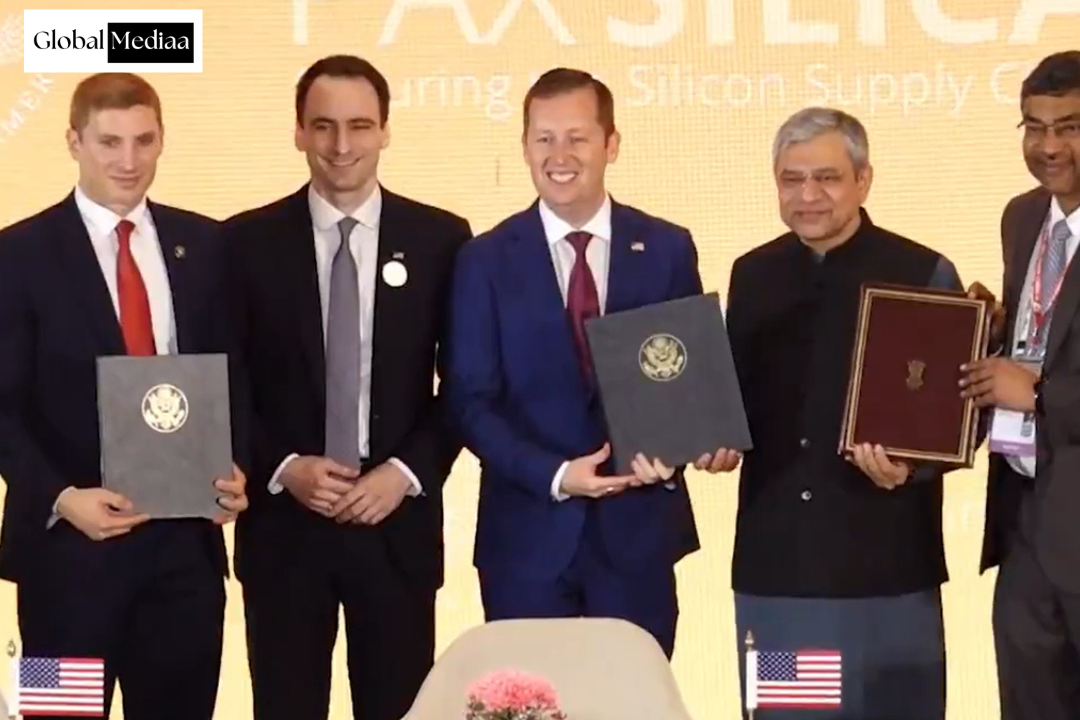
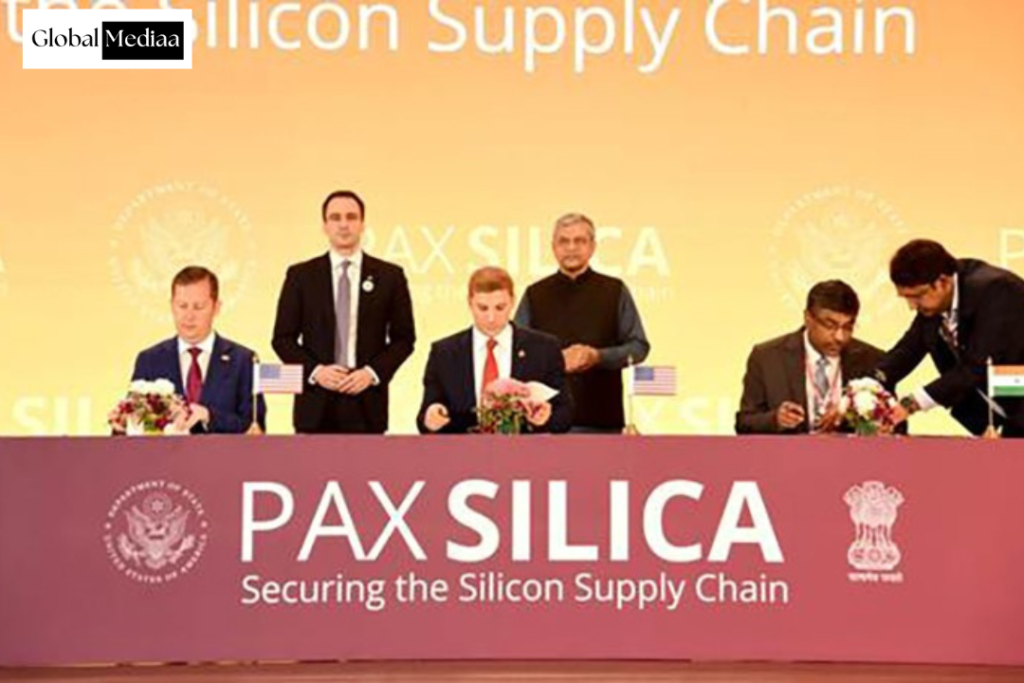
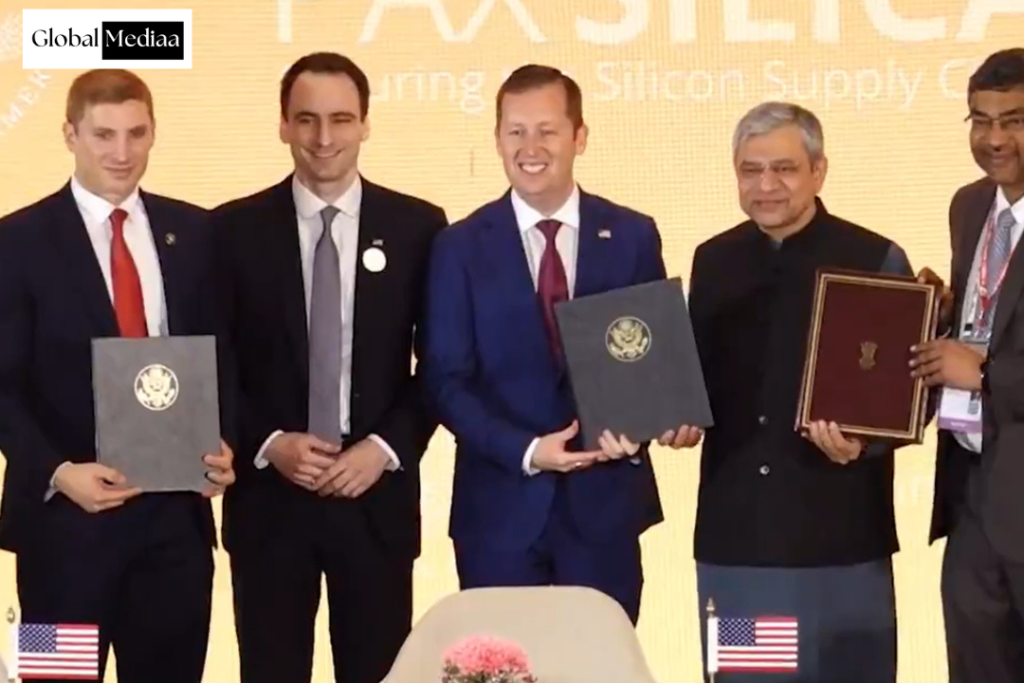
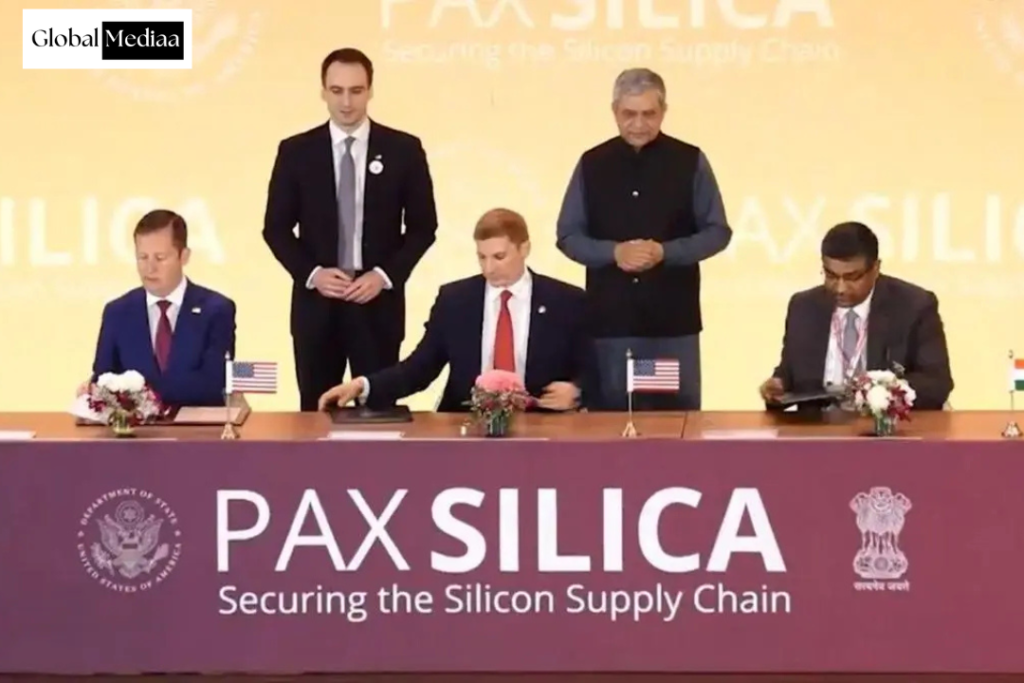
India on Friday (February 20, 2026) signed agreement to join US-led Pax Silica coalition — that is aimed at building a resilient supply chain for critical minerals and artificial intelligence.
Vaishnaw thanked his colleagues foreign minister S Jaishankar and commerce minister Piyush Goyal, and Prime Minister Narendra Modi for “making it all possible”.
As India formally joined the United States’ flagship Pax Silica initiative on Friday at the ongoing AI Impact summit, Union minister Ashwini Vaishnaw did not leave the opportunity to take a dig at the opposition while he was on the stage.
While talking about AI chips, the minister took a ‘potato chip’ jibe to the Opposition and said they will keep crying but India must move forward.
Without directly mentioning any names, Vaishnaw made the remarks in Hindi, which loosely translates to, “There are some people who talk about ‘chips’ which only remind me of ‘potato chips’. Let them be, they will keep crying. Sometimes they cry in the Parliament…All that will keep going on but we must keep moving forward in a clear direction.”
Track live updates of AI Impact Summit here
Meanwhile, he has also thanked his colleagues foreign minister S Jaishankar and commerce minister Piyush Goyal, and Prime Minister Narendra Modi for “making it all possible.”
“India today is a young nation, with a median age of 28 years. It has a long growth path ahead. Even in 2047, India will remain a young nation, with a median age of 37 years. That means that beyond 2047 as well, there will be a growth period of another 50 years,” Vaishnaw said during his address at the signing of Pax Silica.
‘Potential for India-US to work together is limitless’
US ambassador to India Sergio Gor also addressed the gathering during the signing and said that one thing about India which struck him the most was not just the country’s scale, but its “resolve and determination” to chart its own course.
“I keep talking about the limitless potential between our two nations, and I truly mean it. From the trade deal to Pax Silica to defense cooperation, the potential for our two nations to work together is truly limitless. I aim to fulfill that over the next three years that I’m here,” he said.
India ‘diversifying’ oil options, says US ambassador Sergio Gor on Russian purchases; negotiations on for Venezuelan oil
Talking about what Pax Silica is, Gor said that it is a “strategic coalition being formed to shape the 21st-century economic and technological order, securing the full silicon stack—from critical minerals and chip manufacturing to AI implementation.”
“Called ‘Pax Silica‘, it aims to replace coercive dependencies with trusted industrial partnerships that empower free markets. India’s participation is described as strategic and essential, citing its engineering talent, mineral processing strides, and role in strengthening U.S.-India technology cooperation. The partnership seeks to advance trusted AI globally, emphasizing that peace comes through strength,” he said.
February 20, Taniya Dutta brings to you the afternoon’s most critical headlines.
India on Friday joined the US-led strategic alliance Pax Silica at the India AI Impact Summit in New Delhi, aiming to secure supply chains for critical minerals, semiconductors, and AI while reducing dependence on China.
Meanwhile, the Supreme Court declined to plea seeking to stop the construction or naming of mosques or religious structures after Mughal emperor Babur or the Babri Masjid, citing lack of merit.
Separately, Congress leader Rahul Gandhi appeared in a Sultanpur MP–MLA court in a 2018 defamation case over comments against Union Home Minister Amit Shah, recording his statement with the next hearing scheduled for March 9.
On the fifth day of the India AI Impact Summit 2026, India formally joined the Pax Silica coalition, marking a significant milestone in the reinforcement of strategic technology and supply chain cooperation between India and the United States. The signing ceremony brought together senior government leaders from both nations, underscoring a shared commitment to securing the full technology stack that will power the AI-driven global economy.
Pax Silica is envisioned as a strategic coalition of trusted nations committed to securing the “silicon stack”, from critical minerals and semiconductor fabrication to advanced AI systems and deployment infrastructure. The initiative seeks to reduce overconcentration in global supply chains, avoid economic coercion, and ensure that emerging technologies are developed and governed by open, democratic societies.
Addressing the meeting, Minister of Electronics and Information Technology Ashwini Vaishnaw marked the moment as one that transcends a ceremonial signing. “We are not just holding a summit; we are building the future,” he said, stressing that new foundations and new opportunities are being created for the younger generation.
Drawing attention to the power of compounding growth since Independence, he added, “If we look at India’s growth since 1947, we can all imagine the impact of compounding.” He underscored the country’s growing semiconductor capabilities, stating, “Today, India’s talented engineers are designing the world’s most advanced two-nanometer chips. The semiconductor industry will require around one million new skilled professionals, and this is a very big opportunity for India.”
Speaking at the ceremony,
Jacob Helberg, United States Under Secretary of State for Economic Growth, Energy, and the Environment, described the statement as “not merely an agreement on paper, but a roadmap for a shared future.”
Invoking the shared democratic histories of both nations, I have stated, “Today, as we sign the Pax Silica declaration, we say no to weaponized dependency, and we say no to blackmail. Together, we affirm that economic security is national security.
Highlighting the broader ambition behind the initiative, he added, “We are securing the full stack of the future, the minerals deep in the earth, the silicon wafers in our labs and fabs, and the intelligence that will unlock human potential. Pax Silica is our declaration that the future belongs to those who build.”
Echoing this sentiment, Sergio Gor, U.S. Ambassador to India, described India’s entry into Pax Silica as both “strategic and essential.”
“Pax Silica is the coalition that will define the 21st century economic and technological order,” he said. “It is designed to secure the entire silicon stack, from the mines where we extract critical minerals, to the fabs where we manufacture chips, to the data centers where we deploy frontier AI.”
Understanding the democratic foundation of the partnership, Ambassador Gor remarked, “Pax Silica is about whether free societies will control the commanding heights of the global economy. We choose liberty. We choose partnership. We choose strength.”
For more such information, connect with us today: : www.globalmediaa.com