
Fog disrupts travel in Delhi for 7th straight day, haze to continue for two more days
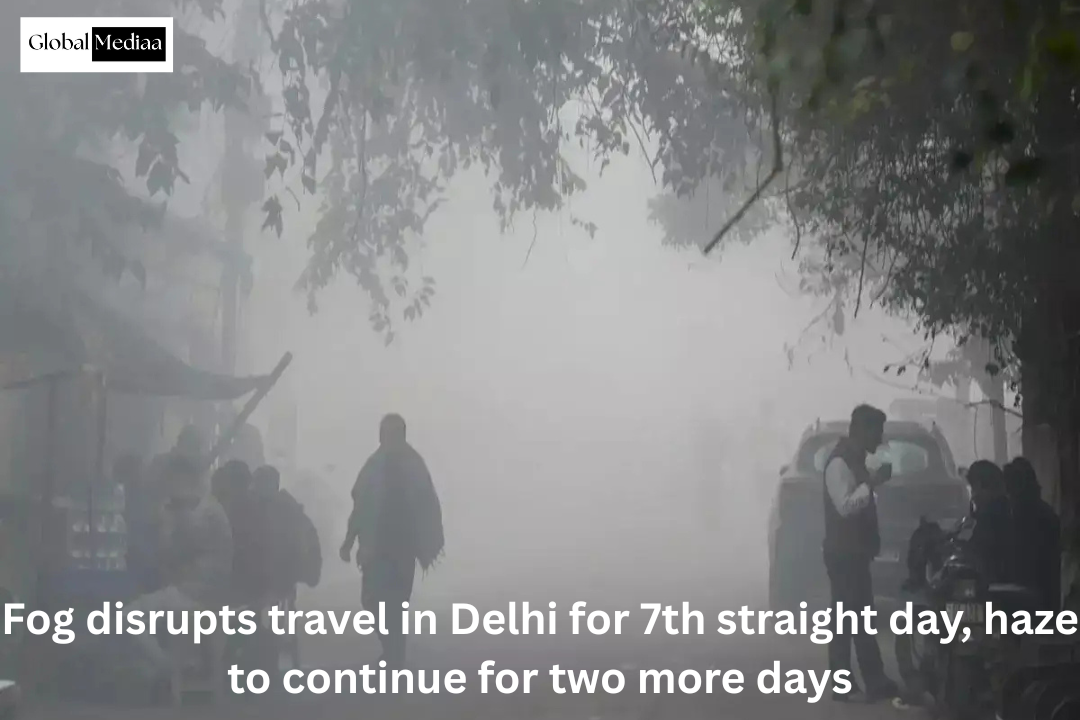
Sunday’s spell of fog was lifted by a Western Disturbance that also peppered Jammu & Kashmir, Ladakh and Himachal Pradesh with fresh snow.
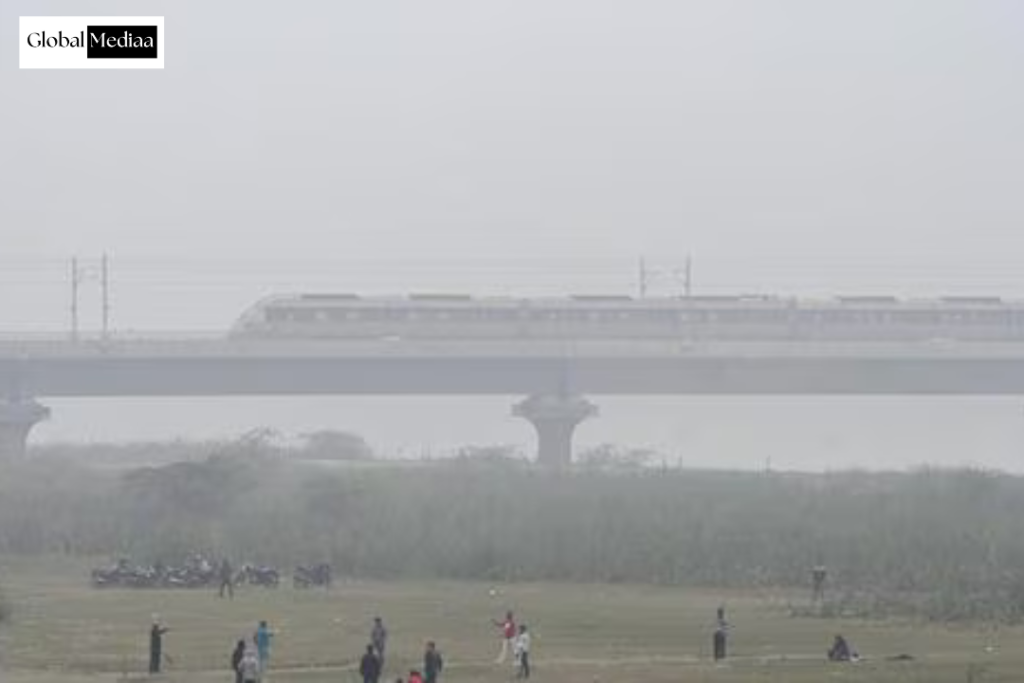
Thick fog continued to reduce visibility across the northern plains and the national capital on Sunday, disrupting trains and flights for a seventh straight day, as weather agencies predict that the hazy conditions will hobble travel for two more days.
Over 100 flights were canceled at the Delhi airport and more than 500 were delayed,
Delhi according to flight tracking website FlightRadar24, with over 4,000 disruptions over the past week. The city’sair quality, meanwhile, improved, but remained in the upper reaches of the “very poor” zone.
Sunday’s spell of fog was wrought by a western disturbance which also peppered Jammu & Kashmir, Ladakh and Himachal Pradesh with fresh snow. This weather system is likely to last till Tuesday, said the India Meteorological Department (IMD), after which the fog is likely to disperse.
Delhi The fog cut visibility across parts of the Capital, which woke up to a blanket of haze and pollution. Visibility was lowest at Safdarjung (200 metres) between 1.30 am and 2.30 am on Sunday. It was 300m at Palam between 10pm on Saturday and 12.30am on Sunday.
The IMD classifies fog as ‘shallow’ when the visibility is between 500 and 1,000 meters; as ‘moderate’ when it is between 200 and 500 meters; as ‘dense’ when it is between 50 and 200 meters; and ‘very dense’ when it is below 50 metres.
Delhi
Delhi clocked an AQI of 377 at 4pm on Sunday, an improvement from 398 on Saturday, but the 11th straight day the pollution levels were in the “very poor” band or worse.
Still, the moderate fog was enough to throw operations out of gear at Delhi airport, which has reeled from a series of crises over the past few weeks.
A total of 107 flights were canceled and over 500 were delayed at the Delhi airport. “Over 55 of these canceled flights were IndiGo’s, followed by around 35 Air India flights,” said an airport official, on the condition of anonymity.

HT analyzed real-time data from the Delhi airport’s website for flights between 5pm and 8pm and found more than 20 cancellations, including 10 IndiGo flights, seven Air India or Air India Express ones, three Akasa and one SpiceJet.
On Saturday, IndiGo had issued an alert warning of possible disruptions due to the fog. On Sunday morning, it issued alerts for fliers in Bengaluru, Amritsar and Srinagar.
However, no airlines have issued alerts for Monday or Tuesday, despite the fog forecast.
Meanwhile, more than 50 trains were delayed under the Northern Railway, with delay times ranging from 30 minutes to over six hours, data showed.
The minimum temperature on Sunday settled at 9.4°C, significantly higher than 6.1°C a day ago and 1.3 degrees above the season’s normal. The maximum temperature settled at 18.1 ° C, four degrees below normal, but higher than 16.9 ° C on Saturday.
The weather agency also predicted heavy snowfall and rainfall, with likely snowstorms at some places in the higher reaches of Jammu, Kashmir, Ladakh and northeastern Himachal Pradesh till Monday.
Western disturbances are weather systems that bring moist air from the Mediterranean Sea, across Iran, Afghanistan and into the Indian subcontinent. When the moist air hits the Himalayas, it is forced upward, cools down, and releases precipitation – snow in the mountains and rain in the plains below.
Sunday’s western disturbance brought more snow to Jammu and Kashmir. Snowfall was reported from the Gulmarg tourist resort in north Kashmir’s Baramulla district, where almost two inches of snow has accumulated. In the tourist resort of Sonamarg on the Srinagar-Kargil highway, snowfall began early Sunday morning and continued until at least afternoon, officials said.
Delhi Sadhna Top, the pass connecting Tangdhar sector along the Line of Control to the main Kashmir Valley, received moderate snowfall with six inches of snow accumulating since Saturday night. Light rainfall began in Srinagar and elsewhere in the valley overnight and was going on intermittently, officials said.
In Himachal Pradesh, the IMD said a moderate to severe snowstorm is likely to occur at isolated places in Kinnaur and Lahaul-Spiti districts. The two districts, along with Chamba, are also predicted to see light to moderate rainfall.
The IMD said dense fog is likely at isolated places in Una, Bilaspur (Bhakhra dam reserve), and Mandi (Balh valley) districts during the late night and early morning hours of December 21 and 22.
RK Jenamani, a scientist at the IMD, said the western disturbance’s effect was strongest on Sunday. “The western disturbance will start moving eastwards and weaken by December 23. Subsequently, no immediate western disturbance is likely. Though fog intensity should reduce, one cannot rule out visibility going down to 200 meters or lower in pockets of Delhi,” he said.
The IMD has not issued a colour-coded fog alert till December 27, but has forecast isolated dense fog on December 26 and 27, alongside moderate fog.
Mahesh Palawat,
vice-president at Skymet, a private weather forecaster, said that after December 24 – and until December 31 – reduced fog is expected in the region. “Fog intensity may reduce as we are not expecting an active western disturbance after this. However, fog will still persist in the region,” he said.
Palawat added that January is expected to see multiple western disturbances, keeping chances of dense to very dense fog in the region.
“We tend to see this in January every year, where there are long spells of dense fog across the entire region. If we even see one active western disturbance, there should be a significant impact in January again in terms of disruptions,” he added.
Thick fog has continued to disrupt air and rail travel in Delhi for the seventh consecutive day, with weather agencies
predicting that these conditions will continue for at least two more days. Over 100 flights were canceled and more than 500 were delayed at the Indira Gandhi International Airport, according to data from the flight tracking website FlightRadar24.
Delhi The fog has significantly reduced the visibility across the national capital, with the India Meteorological Department (IMD) reporting visibility as low as 200 meters at Safdarjung. This has led to a total of over 4,000 disruptions in air travel over the past week, as stated by Hindustan Times.
“The western disturbance will begin moving eastwards and weaken by December 23. Subsequently, no immediate western disturbance is likely,” said RK Jenamani, a scientist at the IMD.
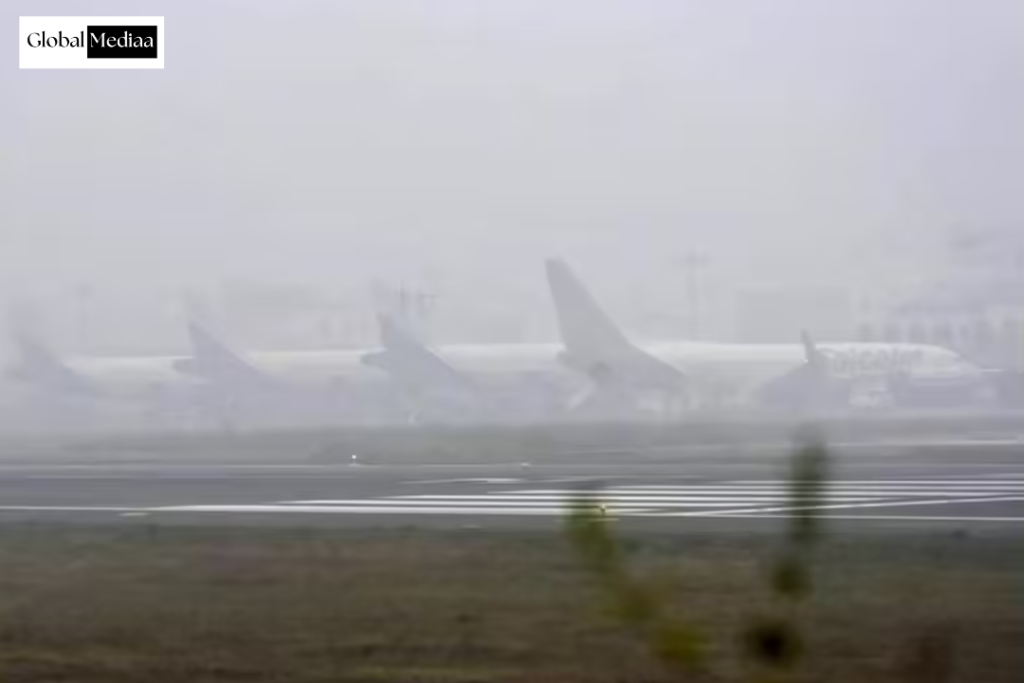
In addition to air travel, train services have also been severely affected, with over 50 trains delayed under the Northern Railway. Delay times have ranged from 30 minutes to over six hours, highlighting the widespread impact of the fog on transportation networks. The publication noted that the minimum temperature in Delhi settled at 9.4°C, which is significantly higher than the previous day.
As the fog continues to blanket the city,
the IMD has classified the fog conditions, indicating that the visibility below 50 meters is considered ‘very dense’. The report further noted that the fog is exacerbated by high pollution levels, with Delhi’s air quality index (AQI) recorded at 377, still within the ‘very poor’ category.
Delhi Flight operations have been especially challenging, with airlines like IndiGo and Air India reporting significant cancellations. The report indicated that IndiGo alone canceled over 55 flights due to the fog, while Air India followed with around 35 cancellations.
For more such information, connect with us today: : www.globalmediaa.com