
Anti-Khamenei Protests Intensify In Iran, Exiled Prince Gives Rallying Cry

Internet access and telephone services were cut almost immediately after the protests started.
US President Donald Trump said on Thursday that he would take severe action against Iran if its authorities “start killing people” who are protesting in Iran, where an economic crisis has led to a widespread unrest.
“I have let them know that if they start killing people, which they tend to do during their riots — they have plenty of riots — if they do it, we are going to hit them very hard,” Trump said during an interview with radio host Hugh Hewitt.
What is happening in Iran?
People in Iran‘s capital poured into the streets and shouted slogans from their homes on Thursday night after a call by the country’s exiled crown prince for mass demonstrations, witnesses said, marking a new escalation in protests that have spread across the Islamic Republic.
Internet access and telephone services were cut almost immediately after the demonstrations began, AP reported.
The demonstrations were seen as the first major test of whether the Iranian public could be mobilized by Crown Prince Reza Pahlavi, whose father fled the country briefly before the 1979 Islamic Revolution.
Some protests have included chants in support of the Shah, expressions that once could have carried the death penalty but now reflect the depth of anger driving demonstrations sparked by Iran’s struggling economy.
Thursday’s unrest followed protests that erupted on Wednesday in cities and rural towns nationwide. More markets and markets closed in solidarity with protesters.
At least 41 people have been murdered and more than 2,270 detained so far, according to the US-based Human Rights Activists News Agency.
As the protests grow, pressure is mounted on Iran’s civilian government and Supreme Leader Ayatollah Ali Khamenei.
Internet company Cloudflare and digital rights group NetBlocks reported widespread outages, attributing them to Iranian government intervention.
Despite the scale of the unrest, the protest movement has largely remained leaderless, and it is unclear how much effect Pahlavi’s call will have in the days ahead.
Pahlavi had called for demonstrations at 8 PM local time on Thursday and Friday. When the time came, witnesses said neighborhoods across Tehran erupted in chants.
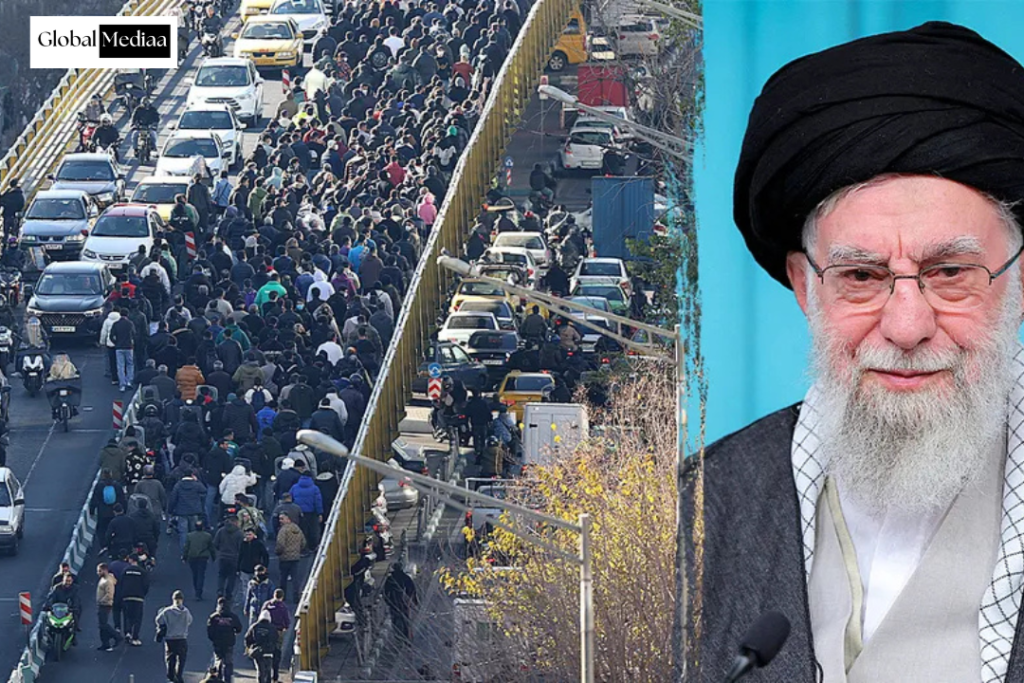
Protesters shouted slogans such as “Death to the dictator!” and “Death to the Islamic Republic!” Others voiced support for the shah, chanting: “This is the last battle! Pahlavi will return!” Thousands were seen on the streets.
“Great nation of Iran, the eyes of the world are upon you. Take to the streets and, as a united front, shout your demands,” Pahlavi said in a statement.
“I warn the Islamic Republic, its leader and the (Revolutionary Guard) that the world and (President Donald Trump) are closely watching you. Suppression of the people will not go unanswered.”
While some protesters have chanted in favor of the shah, it remains unclear whether this reflects support for Pahlavi himself or a broader longing for life before the 1979 Islamic Revolution.
The protests against Iran’s Islamic regime, led by Supreme Leader Seyyed Ali Hosseini Khamenei, have intensified in Tehran, with Iranians, angered by a soaring cost of living amidst a flailing economy and crackdowns by security forces, taking to the streets, shouting slogans against the ruling theocratic regime.
Iran‘s government under President Masoud Pezeshkian cut off the country from the internet and international telephone calls as the nighttime demonstration intensified, and the head of the country’s judiciary and its security forces warned of a harsh response amidst calls for “freedom, freedom.”
At least some of the demonstrators appeared to be heeding a protest call by exiled Crown Prince Reza Pahlavi, whose fatally ill father fled Iran just before the country’s 1979 Islamic Revolution. Demonstrations have included cries in support of the shah, something that could have brought a death sentence in the past but now underlines the anger fueling the protests that began over Iran’s ailing economy.
“Pahlavi Will Return”
Pahlavi had called for demonstrations at 8 PM local time on Thursday and Friday. When the clock struck, neighborhoods across Tehran erupted in chanting, witnesses said.
The chants included “Death to the dictator!” and “Death to the Islamic Republic!” Others praised the shah, screaming, “This is the last battle! Pahlavi will return!” Thousands could be seen on the streets before all communication to Iran cut out.

“Iranians demanded their freedom tonight. In response, the regime in Iran has cut all lines of communication,” said Pahlavi. “It has shut down the Internet. It has cut landlines. It may even attempt to jam satellite signals.”
He went on to call for European leaders to join US President Donald Trump in promising to “hold the regime to account.” “I call on them to use all technical, financial, and diplomatic resources available to restore communication to the Iranian people so that their voice and their will can be heard and seen,” he added. “Do not let the voices of my courageous compatriots be silenced.” Pahlavi had said he would offer further plans depending on the response to his call. His support of and from Israel has drawn criticism in the past—especially after the 12-day war Israel waged on Iran in June. Demonstrators have shouted in support of the shah in some demonstrations, but it isn’t clear whether that’s support for Pahlavi himself or a desire to return to a time before the 1979 Islamic Revolution.
Protest Spread Across Iran
The protests that have popped up in cities and rural towns across Iran continued on Thursday. More markets and bazaars shut down in support of the protesters. So far, violence around the protests has killed at least 42 people while more than 2,270 others have been detained, said the US-based Human Rights Activists News Agency.
The growth of the protests increases the pressure on Iran’s civilian government and its Supreme Leader, Ayatollah Ali Khamenei. CloudFlare, an internet firm, and the advocacy group NetBlocks reported the internet outage, both attributing it to Iranian government interference. Efforts to dial landlines and mobile phones from Dubai to Iran could not be connected. Such outages have in the past been followed by intense government crackdowns.
Meanwhile, the protests themselves have remained largely leaderless. It remains unclear how Pahlavi’s call will affect the demonstrations moving forward.

For more such information, connect with us today: : www.globalmediaa.com