India-New Zealand FTA signed: $20 billion investment, 5,000 visas and duty-free access.
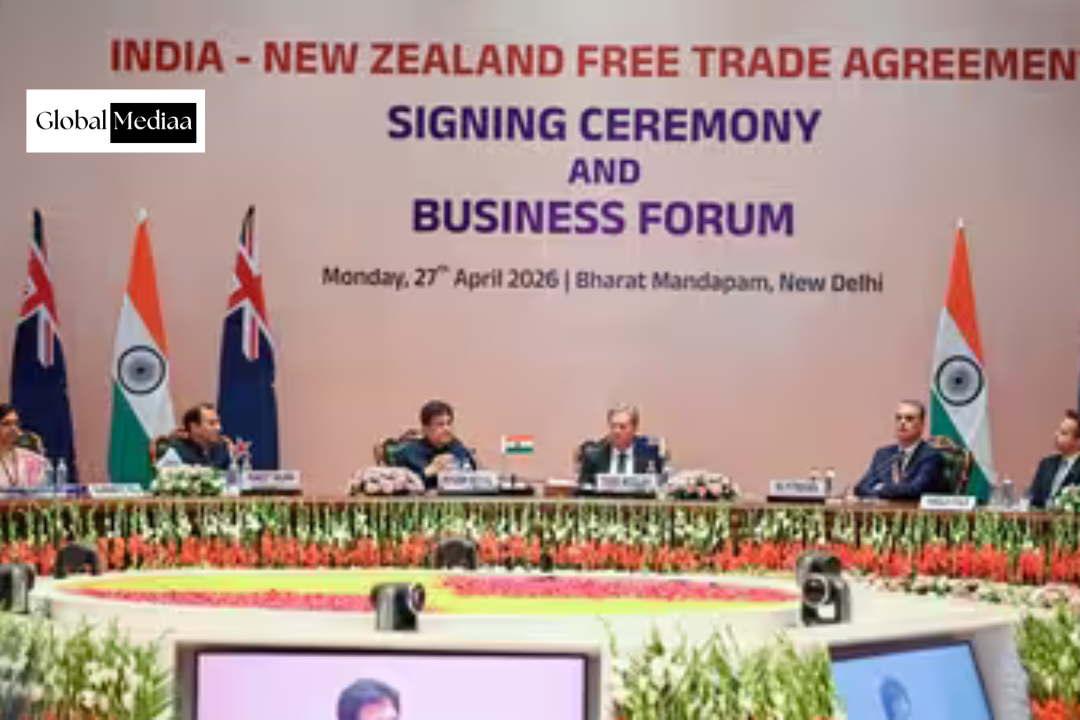
The agreement, as per reports, covers 20 chapters, including trade in goods, remedies, dispute settlement, legal provisions, and more.
India and New Zealand signed their landmark Free Trade Agreement on Monday, April 27. The agreement was inked after teams from New Delhi and Wellington completed negotiations in December 2025.
The agreement covers 20 chapters, including trade in goods, remedies, dispute resolution, legal provisions, and more.
India, New Zealand ink historic deal
Following the signing of the FTA, Union Minister of Commerce and Industry Piyush Goyal stated that the deal between India and New Zealand was concluded in nine months, adding that the pace reflected “depth of trust and shared ambition between our nations.”
“Signing of this FTA marks another defining milestone in India’s engagement with the developed world and brings us closer to PM Modi’s vision of Viksit Bharat 2047,” adding that the FTA with Wellington is the seventh trade agreement the minister has signed in nearly four years.
With benefits outlined for both India and New Zealand, here’s a detailed look at the FTA.
India-New Zealand FTA | Key points
Based on the fact sheet released by both governments, New Zealand has committed to a $20 billion investment over the next 15 years.
Another key feature of the FTA is that it eliminates 100 percent of the duty on Indian exports to New Zealand.
The FTA will also allow temporary employment for Indian professionals in New Zealand. Under the FTA, Opens Skilled Employment Pathways, at least 5,000 visas, called the ‘Temporary Employment Entry Visa’, will be guaranteed for Indian professionals in skilled professions, with a stay of up to three years.
Duty-free wine and spirits from India and wines from New Zealand will enter the domestic market at concessional duties, which will be slowly reduced over 10 years.
Indian goods, including labour-intensive sectors such as textiles, plastic goods, leather, and engineering goods, will enter New Zealand at zero duty.
Meanwhile, India has opened 70.03 percent of its tariff lines to New Zealand, which covers 95 percent of current imports.
The Oceanic country is expected to benefit from exports of its wool, wine, wood, coal and fruits such as avocados and blueberries.
The FTA will also allow collaboration in agriculture and include a plan to support Indian farmers in growing kiwi, apple and the production of honey.
New Delhi:
India and New Zealand signed a free trade agreement (FTA) on Monday. The pact, which is likely to come into force later this year, will have to be ratified by the Parliament in New Zealand. New Zealand’s trade minister Todd McClay and India’s commerce minister Piyush Goyal signed the official document of the accord at Bharat Mandapam in New Delhi.
In New Zealand, the signed FTA will be reviewed by the Parliament’s foreign affairs, defense and trade committee (FADTC). Following a national interest analysis, which includes a public consultation, the committee will submit its report to Parliament for approval. The process is expected to take at least six months.
Earlier on Sunday, New Zealand Prime Minister Christopher Luxon confirmed the signing of the agreement. “It’s agreement,” he said in a video post on X, adding that India’s rise to the world’s third largest economy would offer Kiwi exporters “unprecedented access” to a market of 1.4 billion people.
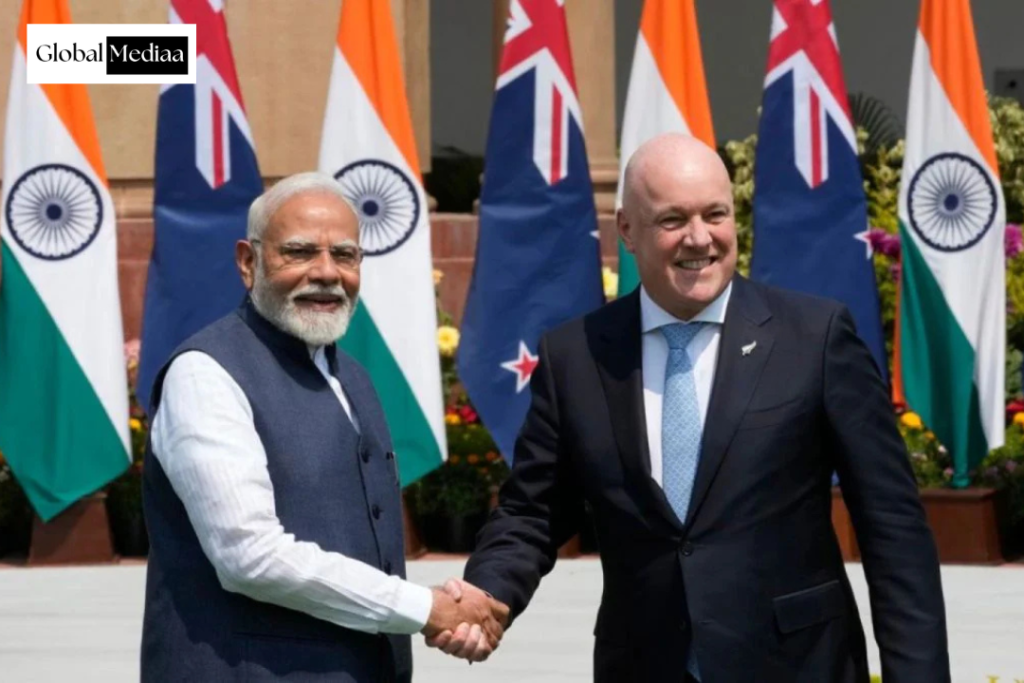
Importantly, negotiations for the trade deal resumed in March 2025 after a decade-long pause in talks. The negotiations were wrapped up by December 2025 — one of India’s fastest FTA processes. It is important to mention here that the accord has won bipartisan support from New Zealand’s major parties.
Commenting on the FTA, Agneshwar Sen, Trade Policy leader, EY India, said, “New Zealand’s offer to eliminate duties on 100 per cent of its tariff lines upon entry into force of the agreement, covering all 8,284 lines, means Indian goods in textiles, apparel, leather, pharmaceuticals, machinery, and auto components enter New Zealand duty-free, erasing an average applied tariff of 2.2 per cent. average includes a 10 per cent tariff on some of our labor intensive exports like clothing and leather products, which also now get the tariff free treatment.”
Sen added, “Beyond goods, the agreement opens mobility pathways for Indian professionals in IT, healthcare, engineering, and education, while a dedicated fast-track arrangement allows Indian food processors to import New Zealand ingredients duty-free for processing and re-export – directly supporting India’s ambition to become a Global Food Hub. With merchandise exports to New Zealand already on an upward trend, this FTA provides the policy certainty and assured market access to sustain that momentum.”
Duty-Free Access for Indian Exports
Indian exporters will get 100% duty-free access to the New Zealand market on 8,284 export products once the agreement comes into force.
About 70 per cent of Indian goods — including leather, handloom, handicrafts and more — will enter New Zealand duty-free under initial conditions.
New Zealand Exports to India
New Zealand will eliminate or reduce tariffs on most of its exports to India — including wool, wood, coal, wine and fruit – boosting Kiwi farmers and export sectors.
Some sensitive Indian sectors like dairy, onion, sugar, spices and edible oils are excluded from liberalization to protect local farmers and industry.
Trade Growth Target
The accord aims to double bilateral trade to about $5 billion over the next five years — a significant expansion from current levels.
Investment and Capital Flows
New Zealand has committed to investment up to $20 billion in India over the next 15 years, according to government statements.
This investment is anticipated across sectors including services, manufacturing, and technology.
Jobs, Visas and Mobility
The FSA includes a visa pathway for 5,000 Indian professionals and 1,000 work and holiday visas annually.
These visas will be available in industries such as IT, healthcare, construction, education and more.
Indian students and youth benefit from expanded post-study work opportunities under the agreement’s mobility provisions.
Once implemented, the accord will reshape trade, boost goods-and-services exchange, and deepen ties between the two economies. While there has been some apprehension regarding dairy imports from New Zealand, the government has assured that the industry will be protected.
Commenting on the pact, Ravin Saluja, Director, Sterling Agro Industries Limited, said, “The India-New Zealand Free Trade Agreement highlights the issue of dairy safeguards once again. New Zealand accounts for almost a third of all dairy trade across the globe, hence making it essential that India is protected by tariffs. Although the agreement does not ensure any direct imports of milk from the country, it might drive Indian companies to enhance their performance standards.”
For more such information, connect with us today: : www.globalmediaa.com