India retain T20 World Cup as Samson and Bumrah inspire rout of New Zealand
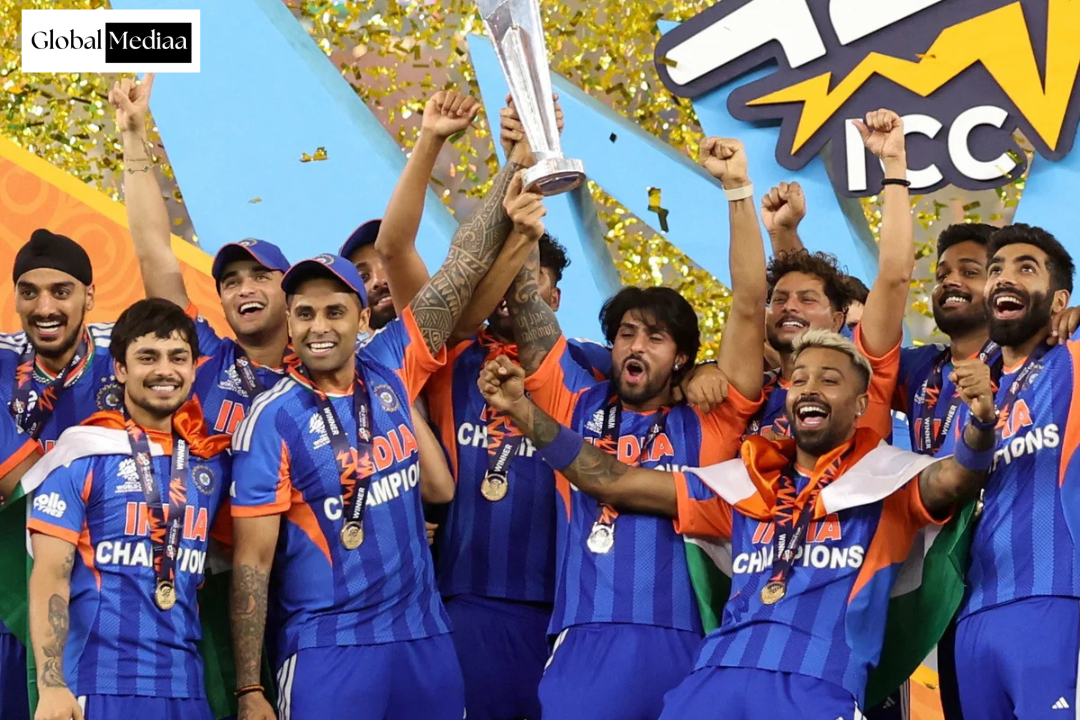
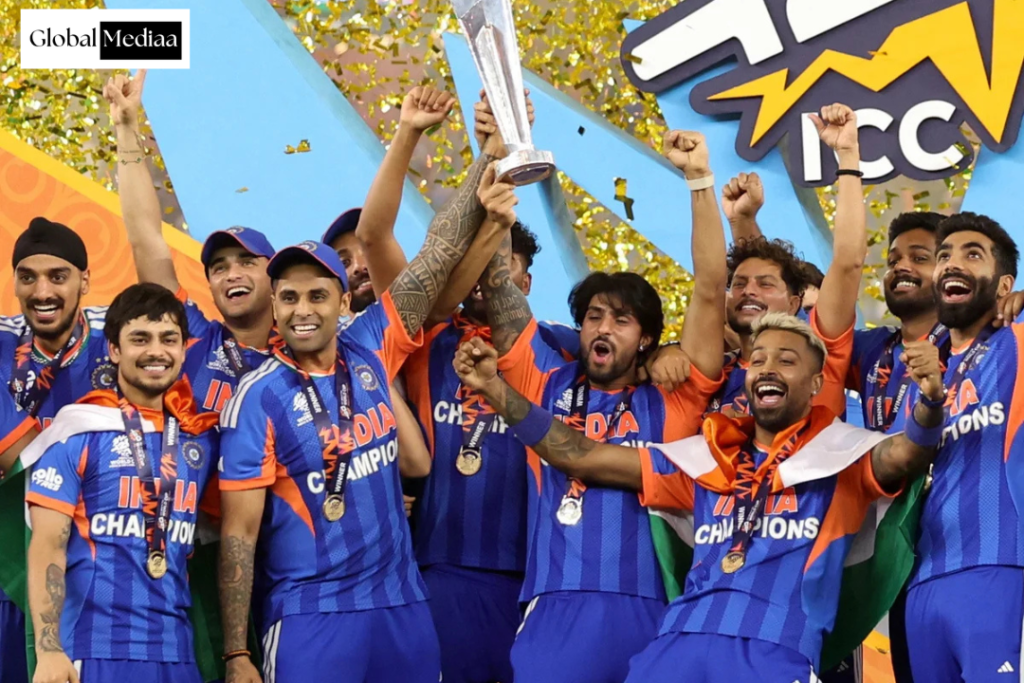
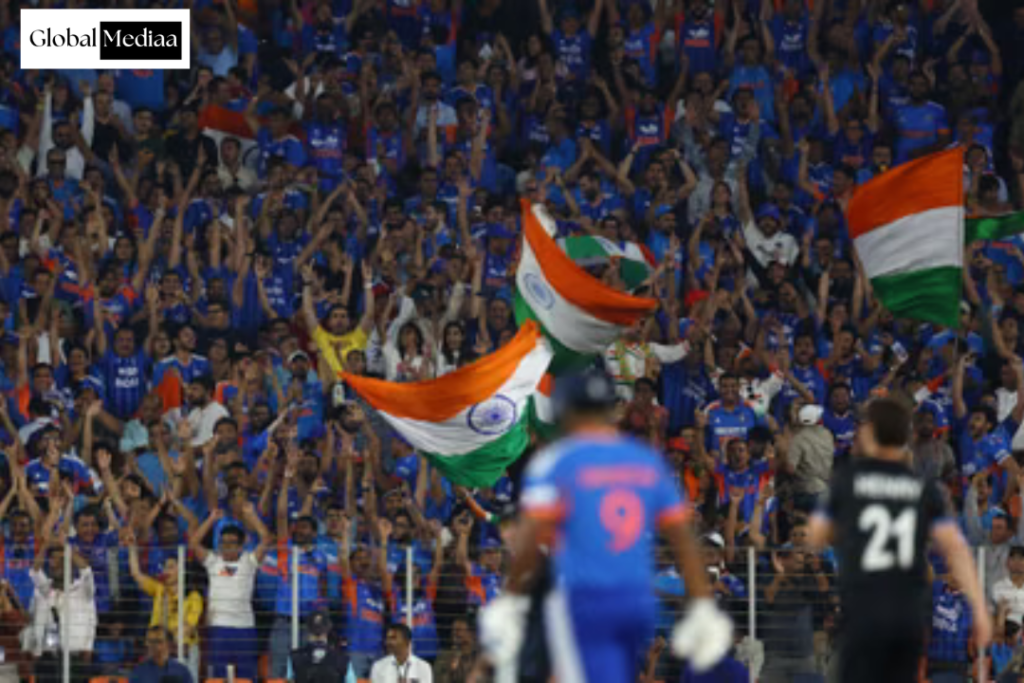
It might not have been the thriller neutrals desired, but it was everything India desired. They became the first men’s team to defend the T20 World Cup and the first side to win it at home, after sinking New Zealand in a deluge of runs in front of 100,000 giddy and almost universally blue‑clad supporters.
New Zealand looked forlorn while conceding 255 and wrung when attempting to chase it, and after meandering through much of their innings with defeat already a certainty they were still 96 behind when it ended. They have now reached four World Cup finals of various hues since 2015 and lost them all, plus the Champions Trophy last year to boot.
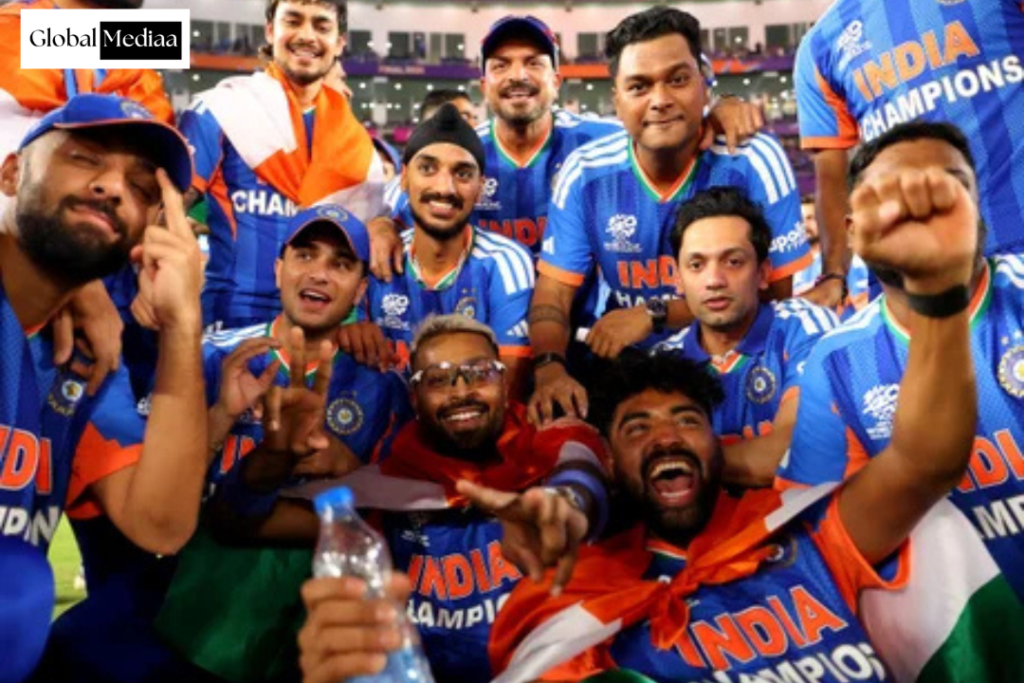
India players celebrate
‘A wonderful journey’: Suryakumar Yadav revels in India’s T20 World Cup win
You know it is absolutely, definitely going to be your day when a fielder drops a catch while blinded and still the ball refuses to come to earth. It was Ishan Kishan who pulled off the party trick, sprinting towards the ball, launching himself forward and collecting the catch – only for the impact of his landing to send it bouncing out of his hands, while his cap simultaneously slid off his head and settled over his eyes. Somehow the ball lodged between his chin and an arm, and thus ended Rachin Ravindra’s brief innings. New Zealand’s reply was just 19 balls old, they were already two down, and the only thing stopping the party from starting was the fact it had been under way for about five hours.
The tournament co-hosts were arguably making themselves hostages to fortune when they unveiled as the tournament anthem a song called Feel the Thrill, which is based around the repeated lyric: “This is our year.” But it has come to pass. This was their tournament, played (largely) in front of their fans, and they were not to be denied.
There were four instances at this World Cup when a team scored more than 250 runs and India were responsible for three of them. Their total here was one less than they scored against Zimbabwe in the Super 8s stage and two more than they got against England in the semi‑finals, but more extraordinary than its size was the fact that it was a bit of a disappointment.
They took a pair of overs to play themselves in, during which neither of their openers appeared at all inclined to take any risks. And then they switched gears, accelerating in an instant from pootle to brutal. By the end of the sixth over they were 92 without loss and had equalized the highest powerplay score in World Cup history.
Jacob Duffy, who returned to the team having not featured at all since the end of the opening group stage, saw his first over go for 15. Lockie Ferguson bowled three broads and went for 24; Matt Henry bowled four wides and went for 21, and so, for a while, it continued.
India’s top-three batsmen all cantered to half-centuries,
Abhishek Sharma first to the mark off 18 balls, although just moments later he edged Ravindra’s first delivery of the night into Tim Seifert’s gloves. Sanju Samson’s took a positively pedestrian 33, and Kishan got there in 23. By the time the teams took drinks after the 14th over, with India 191 for one and Samson having deposited each of the last three balls into the stands, thoughts had turned to the possibility of a score in excess of the fabled 300.
The brief break stalled India’s momentum, though, and in the following five overs there were two boundaries and four wickets. Amid the chaos, and as if to accentuate the bewildering unpredictability of this format, Jimmy Neesham bowled a poor over that brought one run and three wickets.
Samson had reached 89 off 46 when he lifted a full toss down the ground and was caught at long‑on. Another full toss brought another catch at long-on, Kishan having scored 54 off 25. Then Neesham bowled short and wide to captain Suryakumar Yadav, who lifted the ball extravagantly over his shoulder to deep backward square leg, where Ravindra took a fantastic diving catch for a golden duck.
From there scoring slowed for a while, ending when Shivam Dube took his score from two of two at the start of the final over to 26 off eight at its end.
India’s innings was uncannily similar to their effort in the semi‑final,
and so New Zealand’s also had to be: their openers had scored 158 between them in their victory against South Africa, Finn Allen a ludicrous 33-ball hundred, and with that sort of behavior anything is possible. But Allen was out in the third over having scored only nine and their next three batters equaled that meager score between them.
With that going on around him Seifert’s spirited half-century was destined for irrelevance, as were a couple of dreadful drops by Dube and Hardik Pandya. Bumrah, exceptional as ever, took three wickets with beautiful slow yorkers and was named man of the match. This was a poor final, but these are great champions.
It is fairly standard in T20 cricket to start with third man and fine leg as the two fielders outside the circle. With a hard new ball and a fast bowler charging in, edges and skews tend to travel fine behind the wicket.
On slower pitches, they often carry squarer. Which is why Pat Cummins had a deep point in place for Rohit Sharma from the first ball of the 2023 ODI World Cup final at this venue.
This was another World Cup final in Ahmedabad. The surface, though, was different. A mixed-soil pitch, part red and part black, with a little more bounce than the slow black soil track from three years ago.
Mitchell Santner knew what to expect. He had spoken about the pitch being “pretty flat and high scoring” on the previous evening. And so, unlike Cummins in 2023, he began with the more traditional protection. Third man and fine leg stood in place during the Powerplay as Matt Henry, his best bowler, ran in with the new ball.
Santner also knew what to expect from India in those early overs. They would come tough at the bowlers, the same way they had during the five-match bilateral series and through most of this World Cup. It had not always been pretty, but it had been relentless.
The problem for New Zealand was that those first six overs passed too quickly. India’s openers surged to 92 without loss in the Powerplay. By the time the field could spread, the harm had already been done.
For more such information, connect with us today: : www.globalmediaa.com