T20 World Cup: Truly a match-winning innings from Sanju Samson, says Sitanshu Kotak
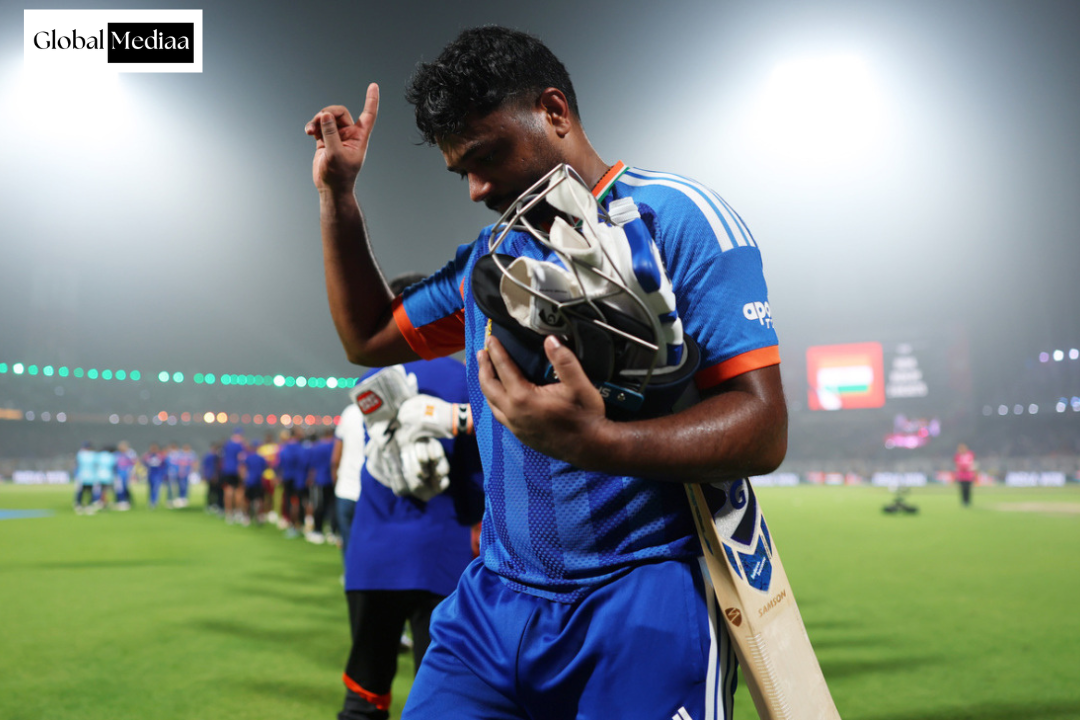
The batting coach admitted that some technical adjustments were made while Samson evolved
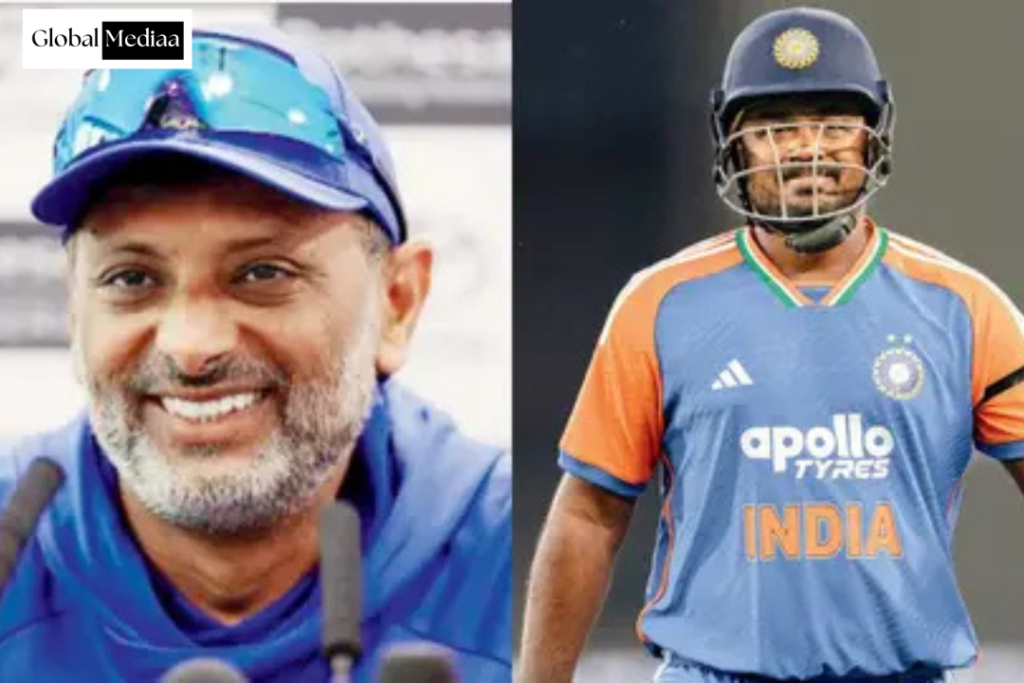
Sitanshu Kotak always put a heavy price on his wicket. Saurashtra’s doughy southpaw was a domestic giant. Never aesthetic in his approach, Kotak always made effective runs. Now in his role as the Indian team’s batting coach, he draws satisfaction from the way his mates perform.
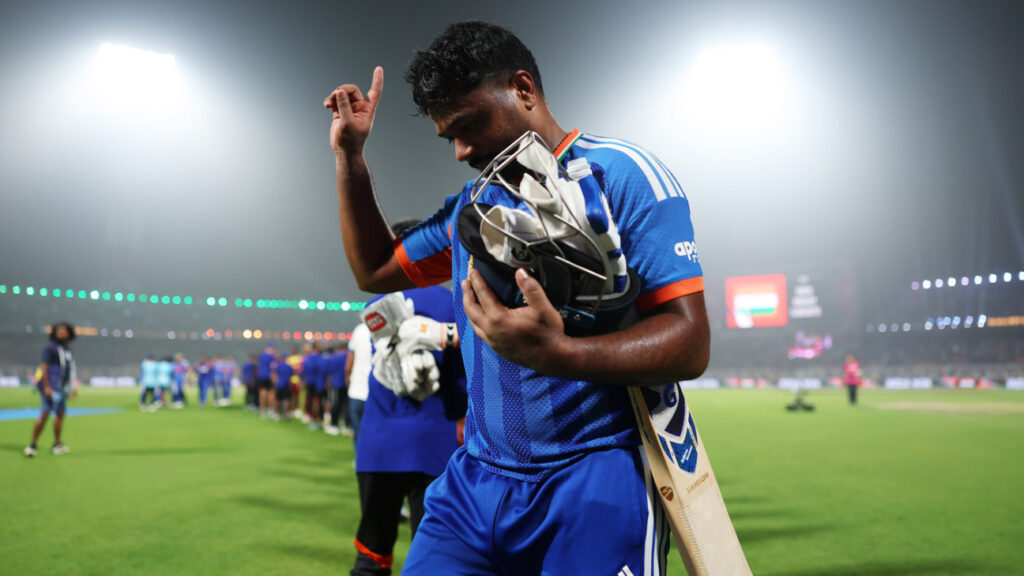
Sanju Samson’s unbeaten 97 at Eden Gardens didn’t feel like a chase so much as a sustained negotiation with entropy. In a virtual knockout, with a mountain of 196 to scale and the inning perpetually threatening to fracture as its seams, Samson made the most counterintuitive choice available to a modern T20 batter under siege: he chose to stay. Not the opening blaze. Not the mid-inning cameo that platters only the scorer. Instead, sustained domination – ball after ball, phase after phase – until the match yielded to him on his own terms.
Which is precisely why the question refuses to die quietly.
Did Samson generate the greatest T20 World Cup innings ever played by an Indian? It is tempting to settle it in the glow, but World Cup greatness is not a single-moment referendum; it is a comparative judgment rendered against the most unforgiving benchmarks the format has produced. For Samson, those benchmarks are immovable: Virat Kohli’s 82* vs Pakistan at the MCG in 2022 and his 82* vs Australia at Mohali in 2016 – the two innings that have been absorbed into the mythology of India T20 cricket, each recalled not merely for the numbers, but for the particular flavor of pressure they absorbed and converted.
To cut through nostalgia and noise, we construct a Pressure Index – a disciplined analytical lens assembled around four stress variables that determine the true cost of a World Cup chase: collapse depth, peak required-rate squeeze, balls-left leverage, and wickets in hand fragility. Each innings is judged against the same standard: how much pressure it carried, across what duration, and how narrow the margin for error really was.
Sanju Samson 97* versus West Indies, Eden Gardens 2026: The architecture of Endurance
A pursuit of 196 is not merely large; it is unforgiving of temperament. It demands intent without recklessness, calculation without paralysis, and the emotional discipline to remain present across an innings that wants desperately to spiral. In an eliminator-equivalent fixture, the psychological burden on every delivery is further compounded.
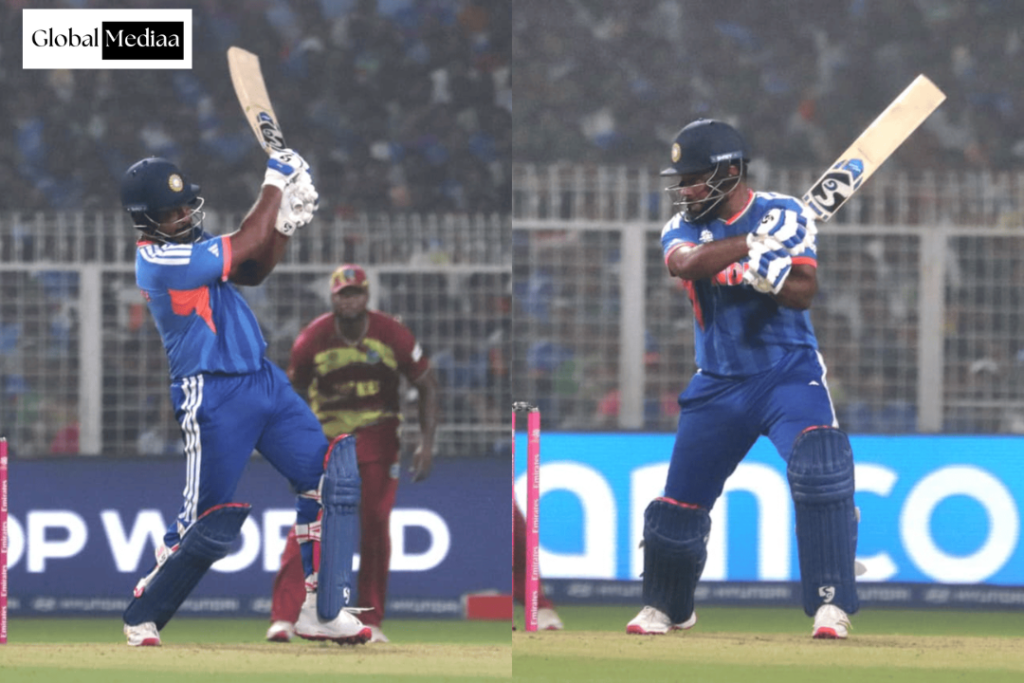
What distinguished Samson was not any single defining sequence but the structural consistency of the entire innings; the way he imposed order on a chase that kept threatening to disorder. He resisted the temptation of the hero shot when wickets tumbled; He returned, each time, to the first principles of a high-target pursuit: protect the scoring options, prevent the required rate from becoming a cliff, retain ownership of the match’s tempo. This was not a fireworks display. It was a masterclass in sustained executive clarity, what the modern game increasingly calls “decision quality under load.”
Collapse depth: Sufficiently unstable to demand early, unsolicited liability.
Required squeeze rate: Grinding, persistent, and cumulative rather than one cataclysmic late spike.
Balls-left leverage: High; Samson presided over multiple phases of the chase and had to recalibrate across all of them.
Wickets-in-hand fragility : Moderate; Composure was essential when partnerships frayed, but the precipice was never quite vertical.
Measured by tournament result, Samson’s case is formidable and direct. This was not simply match-winning; it was qualification-shaping. At an eliminator, every run carried residual weight that a group-stage knock, however spectacular, cannot completely replicate.
Virat Kohli 82 * vs Pakistan, MCG 2022: Salvage operation, then heist
There are chases that become difficult, and there are chases that are catastrophically near-impossible from the moment the top order dissolves. India at 31/4, chasing 160 at the Melbourne Cricket Ground against a Pakistani bowling attack spitting genuine poison on a surface with uncomfortable bounce, was the second category, a situation in which probability and precedent both argued for defeat.
Virat Kohli’s innings derived its greatness from the particular geometry of two problems resolved simultaneously. First, he had to rebuild from the rubble without surrendering to inevitability – a task that demands an almost inhuman ability to compartmentalise panic. The partnership he forged with Hardik Pandya was the fulcrum, transforming a match that appeared over into one that was merely difficult. Second, having rebuilt, he had to finish – and the finishing demanded something beyond skill.
When the equation reached 28 off 8 balls, with Haris Rauf, one of the biggest pace threats in the world at that point, bowling, Kohli made a calculation that he later described in almost geometric terms: the striaght boundaries at the MCG were short; Nawaz had one over remaining and could not be hidden further; If Rauf could be taken down Pakistan would panic. Two consecutive sixes off Rauf – one probably the greatest shot of T20 World Cup history still now, the second an instinctive flick over fine leg that Kohli himself described as “I just threw my bat at it” – compressed an entire match into deliveries. The equation fell to 16 off six, and what followed – Pandya’s dismissal, Karthik’s stumping, Ashwing’s chip over mid-off, India winning off the final ball – is the kind of denouement that scripted drama cannot credibly produce.
Collapse depth: Extreme – the deepest starting point among all three innings examined here.
Required rate squeeze: Maximal, sudden, and ruthless in its timing. The crunch came late, when error margins had already been compressed to near-zero.
Balls-left leverage: Very high; Kohli bore responsibility across the bulk of the innings.
Wickets-in-hand fragility: High overall.
I f Samson’s 97* was mastery through endurance, the MCG innings was mastery through survival – followed by a heist executed with surgical calm.
For more such information, connect with us today: : www.globalmediaa.com