Veteran Indian politician Ajit Pawar dies in plane crash
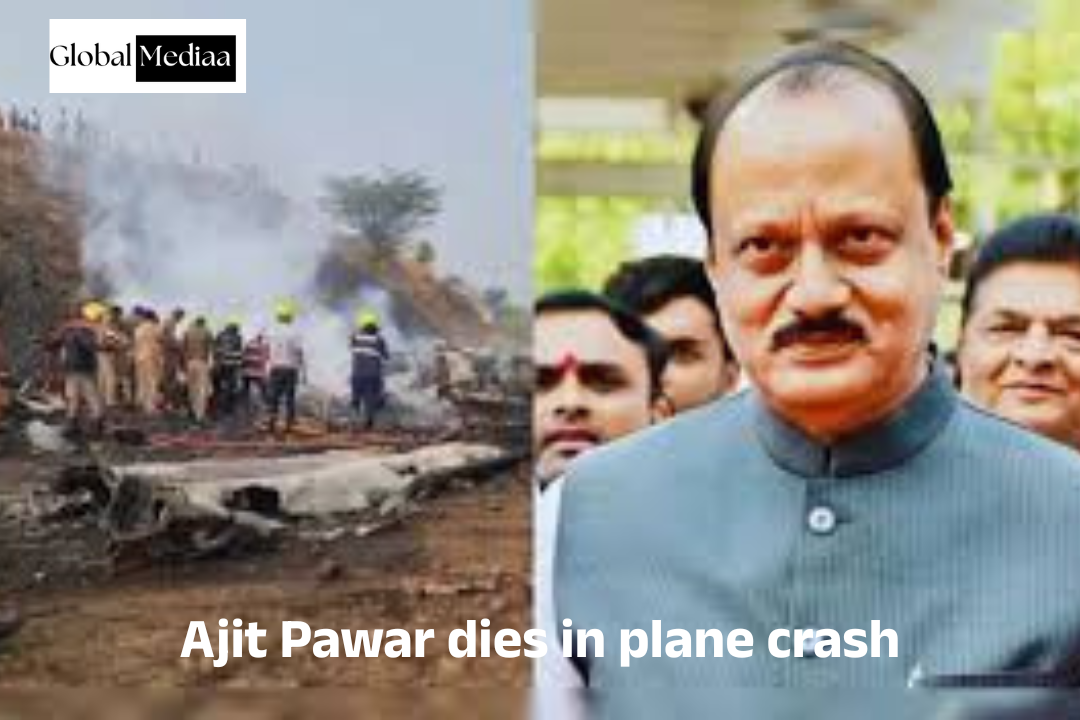
For a large portion of his political career, Ajit Pawar remained in his uncle Sharad Pawar’s shadow.
He started his political career with the Congress party, where the senior Pawar was already a top leader at the time.
When Sharad Pawar left the Congress in 1999 to form the Nationalist Congress Party (NCP), Ajit followed, and rose through the party’s ranks rapidly.
He has been an MP and MLA in Maharashtra and served as the state’s deputy Chief Minister within various governments.
In 2023, Pawar split from his uncle’s party and joined the state’s BJP-led government with the supporting of a large group of party members.
His revolt earned him the deputy chief minister post but divided the NCP into two factions and ended decades of political unity within his own family.
Political analyst Abhay Deshpande says that in recent months, there was talk of a reunion between uncle and niece.
Maharashtra Deputy CM Ajit Pawar was killed in a accident involving a small charter jet, the Bombardier Learjet 45. This has put the spotlight on the safety of small aircraft. While they are not inherently unsafe, smaller planes are more prone to accidents, show data. This is what makes smaller aircraft vulnerable to crashes compared to the bigger ones.
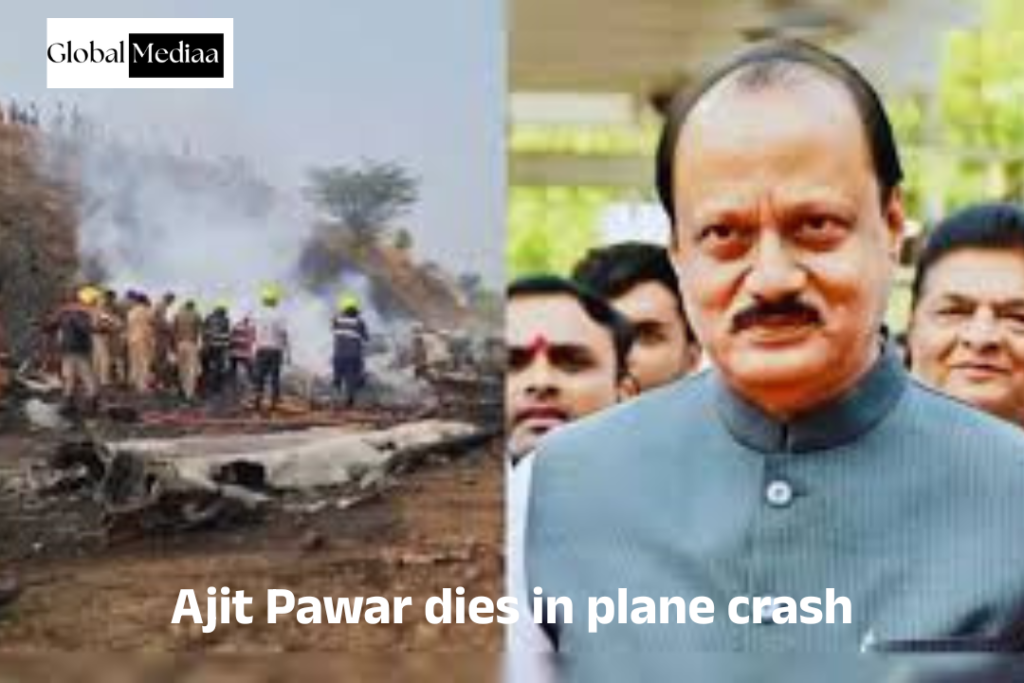
The death of Maharashtra Deputy Chief Minister Ajit Pawar in a plane crash on Wednesday, has left many shocked and reinitiated a long-simmering debate on the safety of small aircraft, which are non-commercial. The 66-year-old Nationalist Congress Party (NCP) leader and four others were onboard a Bombardier Learjet 45 business jet, which crash-landed at Baramati airport, killing everybody inside, including two crew members.
Eyewitnesses and CCTV footage showed the aircraft exploding, with debris scattered throughout the area upon impact. India’s Aircraft Accident Investigation Bureau (AAIB) has launched an investigation.
However, Pawar’s death has revived the inevitable question of whether smaller planes are more susceptible to crashes. This article goes by publicly available research and studies, and is not specific to incidents inIndia.
Small aircraft form a part of the larger general aviation (GA).
The GA is fundamentally all civilian flights that are not scheduled commercial airline service or military in nature. They also include non-private jets, chartered aircraft, and single-engine aircraft, including non-jet-engine turboprops. They record significantly higher accident rates than commercial airliners, which are large aircraft.

In the aviation powerhouse United States, general aviation recorded 1,220 crashes in 2019, of which 233 were fatal. By contrast, commercial aviation reported 40 crashes that year, with only two involving fatalities, according to Washington DC-based outlet, WUSA (Channel 9).
American agency National Transportation Safety Board (NTSB) data also shows the stark disparity in risk. Commercial aircraft logged just 0.2 accidents per 100,000 flight hours in 2019, whereas private planes recorded an accident rate of 5.6 per 100,000 hours. This was more than 25 times higher.
Researchers estimate that small private planes are 32.9 times more likely to crash than large commercial airliners, while charter flights are 9.4 times riskier, noted the US-based SD Litigation, a personal injury law firm.
Moreover, the airline trade association, the International Air Transport Association (IATA), reported that commercial jet accident rates in 2024 fell to 0.23 fatal accidents per million departures, compared to 2024. Whereas business and private jets saw rates around 2.56 in 2024, noted the ASAP Safety Overview and Analysis report of 2025.
WHY DO SMALL AIRCRAFT FACE HIGHER RISKS OF ACCIDENTS?
The reasons are structural. The higher accident rate might not just be the result of the aircraft being smaller, and thereby vulnerable, but also due to operational realities.
Often, small aircraft, which ply on non-scheduled routes to far-flung areas, face looser regulatory oversight and variable pilot experience. However, this is not the case with Ajit Pawar’s plane, which was carrying a high-priority individual and flying out of an important airport, Mumbai.
Smaller aircraft are also exposed to smaller airports, which might not frequently have systems and infrastructures as adequate as those at the Indira Gandhi International Airport or Chhatrapati Shivaji Maharaj International Airport. These factors are often aggravated by challenging weather, and fewer safety redundancies. The Baramati airport, where the plane crashed, is a small airport.
The Baramati airfield is located at an altitude of approximately 2,000 feet and does not have an Instrument Landing System (ILS). Thus, pilots have to rely on manual and visual techniques for landing.
Pilot experience is another factor. General aviation pilots frequently log fewer flight hours than airline pilots. This increases vulnerabilities to loss-of-control incidents, stalls, and fuel mismanagement, especially at smaller, uncontrolled airports, according to studies and experts. But that again doesn’t seem to be the case with both the pilots flying Ajit Pawar‘s aircraft, going by preliminary reports.
DO SMALL AIRPORTS ADD TO RISKS FOR SMALL PLANES?
All single-engine aircraft are generally small planes. Engine failure in single-engine aircraft is far more hazardous than in multi-engine jets. Analysts frequently compare small-plane safety to road driving, with per-mile fatality rates closer to cars than to the “bus-like” reliability of commercial aviation.
However, Ajit Pawar’s aircraft was a double-engine jet aircraft.
Additionally, human error alone contributed to nearly 75% of general aviation incidents, statistics from the US’ Federal Aviation Administration (FAA) and NTSB say, noted Leopard Aviation, an Arizona-based flying school.
On the other hand, commercial flights and airliners operate under strict regulatory frameworks. This mandates dual pilots, advanced weather radar, regimented maintenance schedules, and conservative go/no-go decisions. By contrast, much general aviation operates under lax conditions, like single-pilot operations and greater flexibility in marginal climate.
That said, experts caution against overgeneralization. Business jets like the Learjet, which Pawar was traveling in, are statistically safer than sophisticated piston-engine aircraft, with better avionics and safety features. It also had two pilots.
The pilot, who is familiar with the tabletop runway in Baramati, pointed to a potentially unstable final approach, known as the “short finals phase”, as a possible cause behind the crash. A tabletop runway is where one or both of its ends overlook a drop, making the landing even more challenging.
So, the bottom-line is that small aircraft are statistically more accident-prone than big commercial airliners. That’s largely because they operate under looser regulatory supervision, use smaller airports, and have fewer operational safeguards. Data consistently shows crash rates for general aviation aircraft are significantly higher than for scheduled commercial flights. In the crash which killed Pawar, the AAIB has launched a probe whose report would be crucial in determining the exact factor or factors behind the incident.

For more such information, connect with us today: : www.globalmediaa.com