U.S. threatens Venezuela’s acting president as Maduro awaits Monday hearing
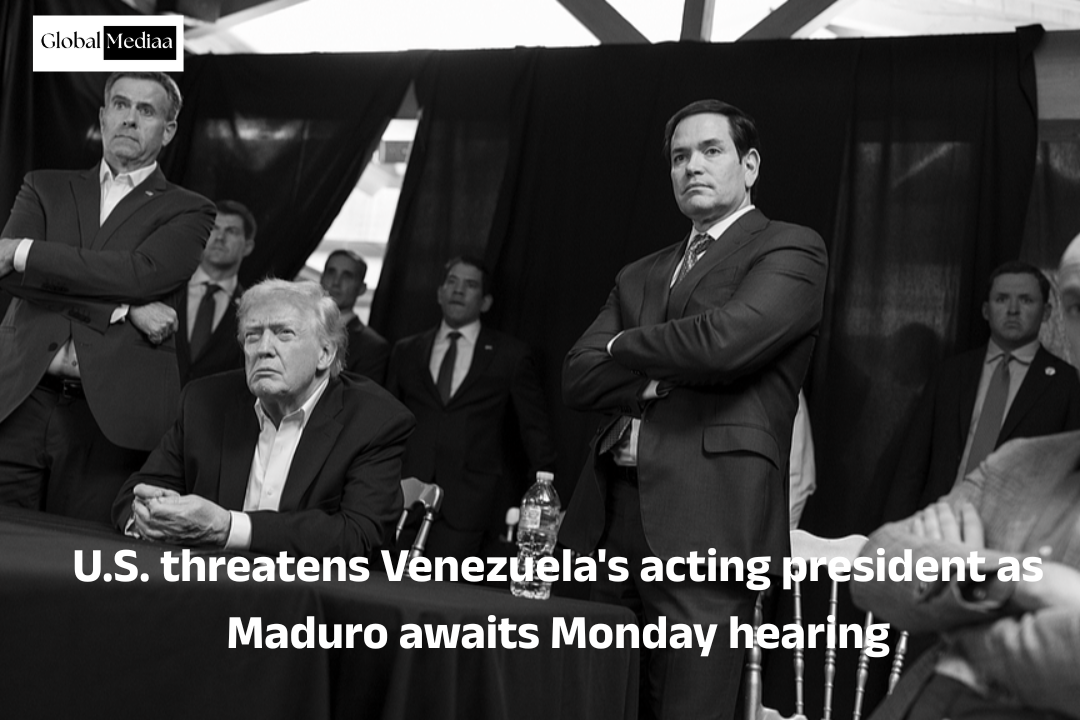
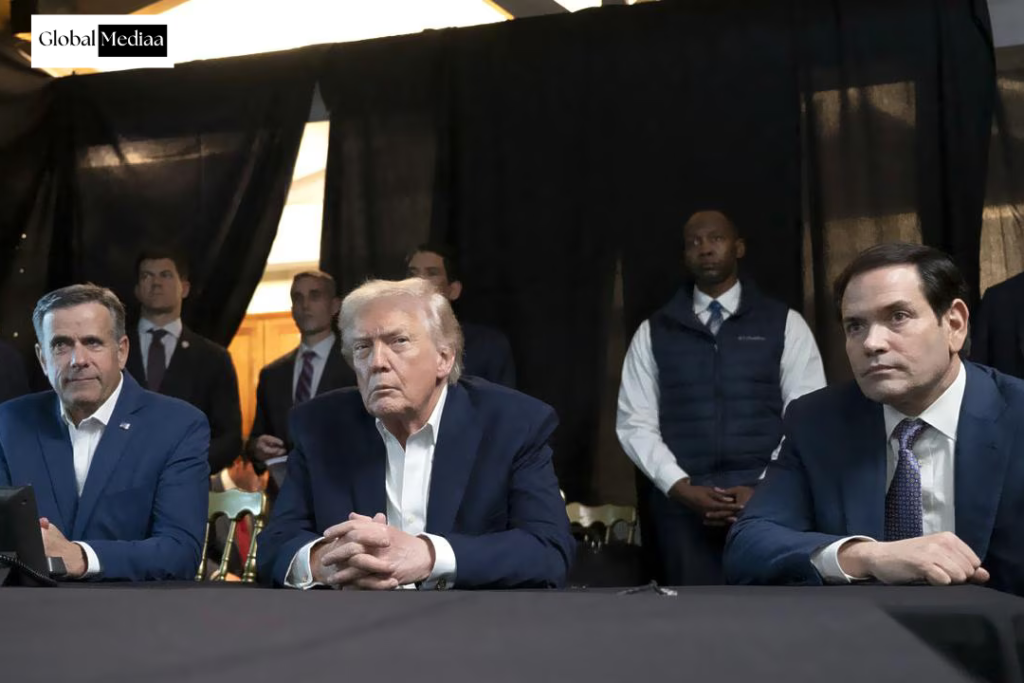
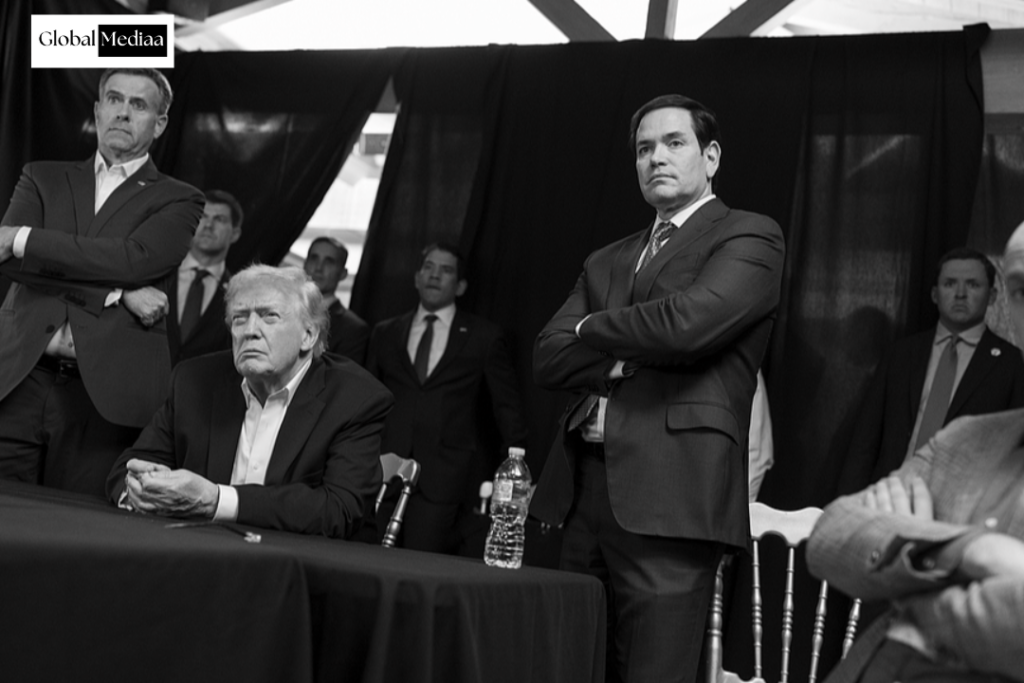
U.S. President Donald Trump, with CIA Director John Ratcliffe, Secretary of State Marco Ruby and Deputy Chief of Staff Stephen Miller monitor U.S. military operations in Venezuela, from Mar-a-Lago Club in Palm Beach, Florida, U.S., on January 3, 2026.
U.S. President Donald Trump
U.S. President Donald Trump threatened on Sunday that Venezuela’s acting president, Delcy Rodriguez, could “pay a very big price” if she continued to refuse collaboration with the United States.
“If she doesn’t do what’s right, she is going to pay a very big price, perhaps bigger than Maduro,” Trump said in a phone interview with The Atlantic. Venezuelan leader Nicolas Maduro was taken by U.S. Forces away from his country on Saturday and is now in custody in New York to stand trial on alleged drug charges on Monday.
U.S. Secretary of State Marco Rubio said in another media interview on Sunday morning that Trump will keep all options open on how to “run” Venezuela, assess whether the country’s interim leadership can “make the right decisions,” and will not rule out a U.S. military presence in the country in the future.
Following the U.S. raid, Rodríguez on Saturday demanded that the United States release Maduro and his wife, noting that Venezuela’s territorial integrity was “savagesly attacked” as the U.S. rocked Caracas and other parts of the country.
“We expect to see more compliance and cooperation than we were previously receiving,” Rubio said of Rodriguez on CBS.
Our objectives when it comes to how Venezuela affects the national interest of the United States have not changed, and we want those addressed. We want drug trafficking to stop. We want no more gang members to come our way,” Rubio said.
Late Saturday,Venezuela‘s Supreme Court of Justice ordered that the nation’s vice president, Rodriguez, immediately assume the role of acting president in the absence of Maduro.
U.S. military move
Trump has declined to rule out a U.S. military presence in Venezuela in the future.
For months, the United States has deployed large-scale air and navy forces in Caribbean waters near Venezuela as part of its so-called campaign against narco-terrorism. The Pentagon has sunk more than 30 alleged drug boats in the Caribbean and the eastern Pacific since September, claiming about 110 lives.

At least 40 people were reportedly killed in U.S. airstrikes on the South American nation in the early hours of Saturday, as US Forces carried out an operation to seize Maduro and his wife by force.
Venezuela’s response
Venezuela‘s Bolivarian National Armed Forces on Sunday strongly condemned the “cowardly kidnapping” of the Venezuelan president by the United States.
In a statement read out on national radio and television, Defense Minister Vladimir Padrino Lopez also proclaimed that U.S. troops sent to Venezuela early Saturday murdered “in cold blood” a large part of Maduro’s security detail, soldiers and innocent civilians.
Venezuelan military expressed its full support for the state of external emergency declared by the Venezuelan government following the U.S. strikes on several locations within Venezuela.
“Our institution will continue to employ all its available capabilities for military defence, the maintenance of internal order, and the preservation of peace,” the armed forces statement said.
Padrino said the armed forces activated “the Full Operational Readiness Plan throughout the entire national territory and in perfect civilian-military-police coordination.”
This action aims to “integrate the elements of National Power into the mission to confront imperial aggression, forming a single combat force to ensure the freedom, independence, and sovereignty of the Nation,” the military said.
International response
The international community has expressed deep shock at the Trump administration’s raid on Venezuela and the seizures of Maduro. Many countries have issued statements strongly condemning what they describe as the blatant use of force against a sovereign state and its President.
Migrants and descendants from across Latin America, joined by Spanish supporters, gathered outside the U.S. Embassy in Madrid on Sunday to protest what they described as US interference in Venezuela. Participants carried Latin American flags and chanted slogans in support of the country’s sovereignty.
“Venezuela, an immortal nation,” the crowd chanted. “For your resistance, the peoples of the world stand with you.” Araceli Muñoz Rojas, one of the participants, said she joined the rally to protest what she described as U.S. Military interference in Venezuela, calling it a violation of international law and national sovereignty. Miguel Sanchez, a dual Spanish-Argentine citizen, warned that external intervention could set a precedent across the region.
Here’s the latest
- Venezuela’s future: The US is beginning to outline its plans for Venezuela after the capture of President Nicolás Maduro. President Donald Trump said the US is “in charge,” but added that he has not yet spoken to Vice President Delcy Rodriguez. Trump won’t rule out putting US forces in Venezuela as he maintains “leverage” over the country’s future, Secretary of State Marco Rubio said.
- Emboldened Trump warns other nations: Following Maduro’s ouster, Trump implied that there could be US military action in Colombia and that the country “needs Greenland.”
- Strike casualties: Cuba said at least 32 of its nationals died during the US military operation to seize Maduro which it described as a “criminal attack”.
- Court appearance: Maduro is expected to appear in court for the first time tomorrow at afternoon ET in New York City. He faces drug and weapons charges.
Acting Venezuelan President Delcy Rodríguez said she has extended an invitation to the United States government to collaborate on an “agenda of collaboration.”
The agenda, she said, would be aimed at “shared development, within the framework of international law to strengthen enduring community coexistence.”
Rodríguez said Venezuela will “prioritize” moving toward “balanced and respectful international relations” with the US and the region.
“President Donald Trump: our peoples and our region deserve
“Venezuela has the right to peace, to development, to sovereignty and to a future,” she added.
Tone shift: The latest comments by Rodriguez are a noticeable shift from earlier statements where she had condemned the “brutal use of force” by the United States to seize President Nicolás Maduro.
For more such information, connect with us today: : www.globalmediaa.com