
UAE to withdraw forces from Saudi Arabia after bombing in Yemen’s Mukalla

After Saudi Arabia‘s airstrike on Yemen, UAE will withdraw troops, emphasizing security in counterterrorism and denying accusations of sending weapons.
United Arab Emirates(UAE)
United Arab Emirates UAE on Tuesday said that it would withdraw its troops from Saudi Arabia after the country bombed Yemen’s port city, Mukalla, reportedly targeting a shipment of weapons that had arrived from UAE.
Citing safety and effectiveness of counterterrorism missions as the reason behind this move, the UAE would pull out its remaining personnel of its own volition, Bloomberg reported quoting the statement from the ministry of defence.
Denying the allegation of shipping weapons to Yemen, UAE’s ministry of foreign ministry said that it is ‘supporting the restoration of legitimacy and combating terrorism, while fully respecting the sovereignty of the Republic of Yemen’ adding that the shipment contained vehicles for use by the UAE forces in the country.
The UAE had previously said that Yemen’s governance and territorial integrity is “an issue that must be determined by the Yemeni parties themselves.”
What happened in Mukalla? Top points:
On Tuesday, a shipment from UAE’s Fujairah arrived at Yemen’s Mukalla port. Soon thereafter Mukalla was bombed by Saudi Arabia who alleged that the shipment contained weapons that were sent to support the Abu Dhabi-backed Southern Transitional Council (STC), which seeks to establish sovereignty in Yemen’s southern parts since April 2017.
The UAE denied the allegation saying that it had vehicles for use by UAE troops in Yemen and that it would withdraw its forces from Yemen soon.

The bombardment was followed by airstrikes in Mukalla by the Saudi-led coalition.
Tensions were on the rise from earlier his month, when STC confiscated most of the provinces of Hadramout and Mahra in Yemen, including oil facilities in the region.
In the opposite side of STC, there is the Yemeni military. They are allied with the Hadramout Tribal Alliance, a local tribal coalition supported by Saudi Arabia.
Both Saudi Arabia and UAE back these political rival groups based in Yemen which sit on crossroads of shipping lanes on the edge of the predominant energy-exporting region in the Middle East.
The latest moves reinforced the STC positions across southern Yemen, which could give them leverage in any future talks to settle the Yemen conflict. The STC has long sought that any settlement should give southern Yemen the right of self-determination.
Earlier on Friday,Saudi Arabia had targeted the Hadramout region in air strikes. Analysts described this as a warning for the separatists to halt their advance and leave the governorates of Hadramout and Mahra.
The United Arab Emirates has announced the withdrawal of its forces from Yemen, announcing an end to what it called “counterterrorism” operations there, after Saudi Arabia accused Abu Dhabi of supporting separatists in Yemen.
The announcement on Tuesday came after Yemen’s internationally recognized government demanded the UAE pull its forces from the country within 24 hours, a call backed by Saudi Arabia.
Hours earlier, Saudi Arabian-led coalition forces also attacked the southern Yemeni port of Mukalla, targeting what Riyadh said was a UAE-linked arms shipment destined for the separatist Southern Transition Council (STC) in Yemen.
The STC, which initially backed Yemen’s internationally recognized government against the Houthi rebels, launched an offensive against the Saudi Arabian-backed government troops this month, seeking an independent state in the south.
The advance broke years of deadlock, with the STC seizing control of wide swaths of southern Yemen, including the Hadramout and Maharas province, in defiance of warnings from Riyadh. Hadramout borders Saudi Arabia, and Mahara is close to the border.
Saudi Arabia
Saudi Arabia on Tuesday said it was disappointed about “pressure exercised by the UAE” on the STC to conduct military operations in the Hadramout and Mahara provinces. Riyadh said it considered the moves a threat to its national security.
“In this context, the kingdom stresses that any threat to its national security is a red line, and the Kingdom will not hesitate to take all necessary steps and measures to confront and neutralize any such threat,” it said.
Following Tuesday’s rapid-fire events, the UAE‘s Ministry of Defense said it carried out a “comprehensive assessment” of its role in Yemen and decided to end its mission there.
“In light of recent developments and their potential implications for the safety and effectiveness of counterterrorism missions, the Ministry of Defense announces the cessation of the remaining counterterrorism personnel in Yemen of its own volition, in a manner that ensures the safety of its personnel,” the UAE statement said.
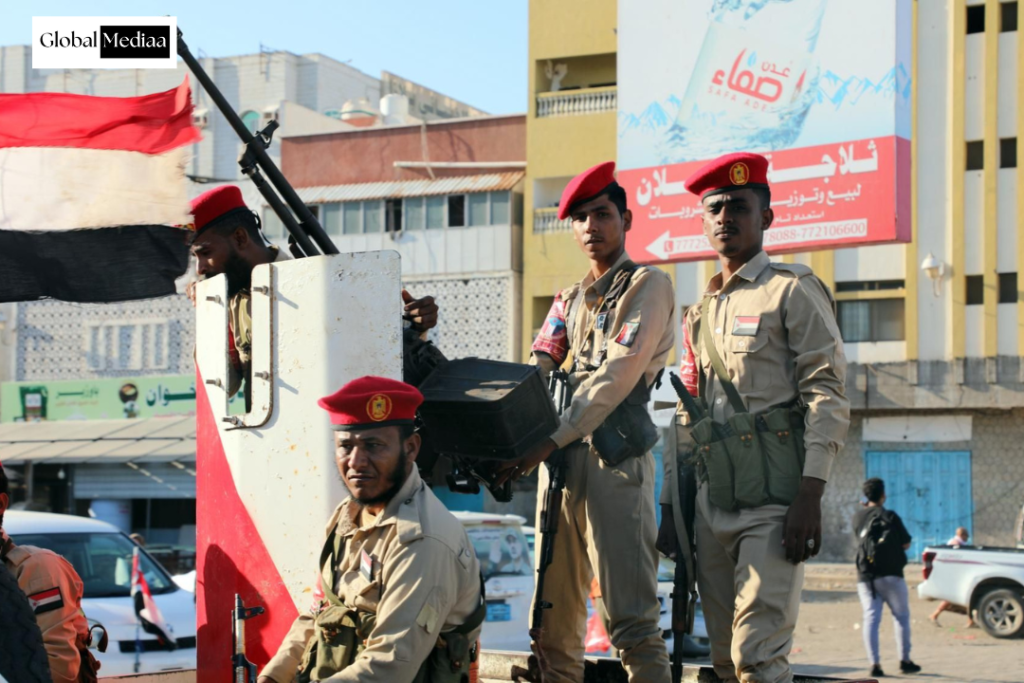
DUBAI, United Arab Emirates (AP)
DUBAI, United Arab Emirates (AP)— Saudi Arabia bombed Yemen’s port city of Mukalla on Tuesday after a weapons shipment from the United Arab Emirates arrived for separatist forces in the war-torn country, and warned that it viewed Emirati actions as “extremely dangerous.”
The bombing followed tensions over the advance of Emirates-backed separatist forces known as the Southern Transitional Council. The council and its allies issued a statement supporting the UAE’s presence, even as others allied with Saudi Arabia demanded that Emirati forces withdraw from Yemen in 24 hours’ time.
The UAE called for “restraint and wisdom” and disputed Riyadh’s allegations. But shortly after that, it said it would withdraw its remaining forces in Yemen. It remained unclear whether the separatists it backs will give up the territory they recently took.
The confrontation threatened to open a new front in Yemen’s decade-long war, with forces aligned against the Iranian-backed Houthi rebels possibly turning their sights on each other in the Arab world’s poorest nation.
It also further strained ties between Saudi Arabia and the UAE, neighbors on the Arabian Peninsula that have increasingly competed over economic issues and regional politics, particularly in the Red Sea area. Tuesday’s airstrikes and ultimatum appeared to be their most serious confrontation in decades.
The UAE-backed Southern Transitional Council is likely to respond by consolidating control,” said Mohammed al-Basha, a Yemen expert and founder of the Basha Report, a risk advisory firm.
“At the same time, the flow of weapons from the UAE to the STC is set to be curated following the port attack, particularly as Saudi Arabia controls the airspace.

For more such information, connect with us today: : www.globalmediaa.com