More jobs, income’: New Zealand PM backs India FTA even as foreign minister objects
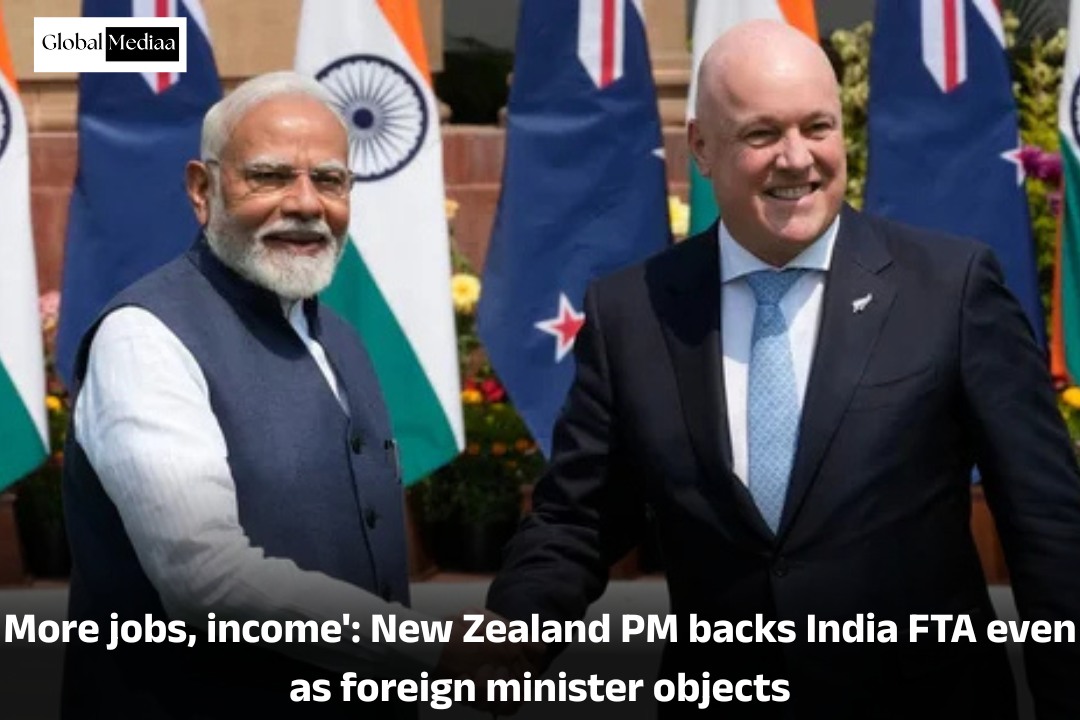
The New Zealand PM Christopher Luxon framed the agreement as part of his government’s broader agenda, saying, “Fixing the basics. building the future.”
New Zealand Prime Minister Christopher Luxon on Saturday welcomed the Free Trade Agreement (FSA) with India, days after his country’s foreign minister expressed strong reservations. Luxon described the deal as a landmark achievement for his government and a key step toward future growth.
Luxon said,
“We said we’d secure a Free Trade Agreement with India in our first term, and we’ve delivered.” Stressing its economic potential, he added that the deal would mean “more jobs, higher incomes and more exports by opening the door to 1.4 billion Indian consumers.”
The New Zealand leader said that the agreement was part of his government’s broader agenda, saying, “Fixing the basics. building the future.”
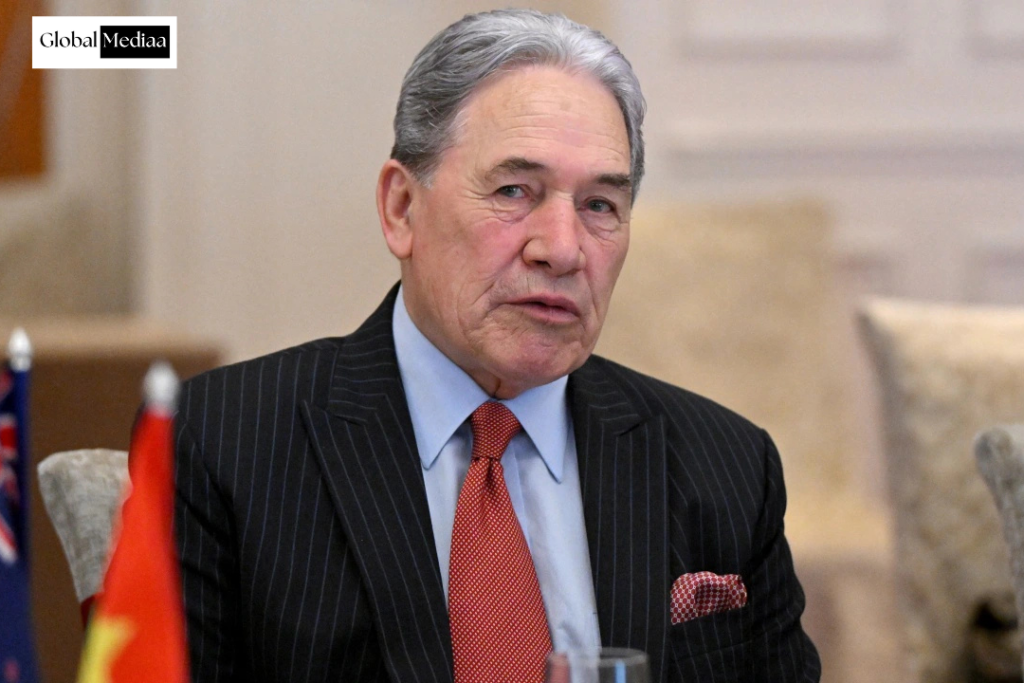
However, the agreement recently threw open differences within New Zealand’s ruling coalition as foreign minister Winston Peters criticized the deal as “neither free nor fair.”
Peters, who leads the New Zealand First (NZF) party, went on to say that he had conveyed his party’s concerns to India’s external affairs minister S Jaishankar, noting that he held “utmost respect” for him despite opposing the deal.
Deal announced after Modi-Luxon talks
The FTA was announced earlier this week after talks between PM Narendra Modi and Luxon. Both leaders said the deal could potentially double bilateral trade within five years and lead to investments worth $20 billion in India over the next 15 years.
Negotiations for the deal began in March. At the time of the announcement, Modi and Luxon said the agreement reflected the “shared ambition and political will to further deepen ties” between the two countries.
NZ minister says, ‘low-quality deal rushed through’
Peters argued that the agreement gave too much away without securing enough return for New Zealand. He said NZF had warned its coalition partner against rushing the negotiations without broad political backing.
“New Zealand First urged its coalition partner not to rush into concluding a low-quality deal with India, and to use all three years of this Parliamentary cycle in order to get the best possible deal,” Peters wrote in a lengthy post on
He further alleged that speed was prioritized over substance, saying, “National preferred doing a quick, low-quality deal over doing the hard work required to get a fair deal that delivers for both New Zealanders and Indians.”
A major point of contention for Peters is the treatment of the country’s dairy industry. He said while New Zealand had completely opened its market to India, the move was not matched by reduced tariff barriers on Indian imports of key dairy products.
“This is not a good deal for New Zealand farmers and is impossible to defend to our rural communities,” Peters said, adding that the India FTA would be “New Zealand’s first trade deal to exclude our major dairy products – including milk, cheese and butter.”
As reported earlier by Hindustan Times, agriculture and dairy emerged as sensitive areas during negotiations for the Free Trade Agreement (FSA). People familiar with the discussions said both sides agreed to keep these controversial sectors outside the scope of the talks in order to expedite progress on the trade deal.
Notably, trade in goods and services between India and New Zealand standing at $2.07 billion in 2024, with Indian exports accounting for $1.1 billion of the total. Key exports included pharmaceuticals from India and forestry and agricultural products from New Zealand.
According to an Indian government release, currently, New Zealand is India’s second-largest trading partner in Oceania.
Migration and labor market concerns
Peters also claimed that parts of the agreement focused less on two-way trade and more on facilitating the movement of Indian workers to New Zealand and increasing investment flows into India. He claimed the level of labor market access granted to India had not been extended to partners such as Australia or the UK.
Raising concerns about domestic employment, he said, “New Zealand First looks at all proposed changes on migration from the same viewpoint: do they protect the ability of New Zealanders to find meaningful employment as well as the integrity of our immigration system?”
According to Peters, the India deal “fails that test” by creating a new employment visa category specifically for Indian citizens, which he said could drive increased migration interest “at a time when we have a very tight labor market.”(Edited)Restore original
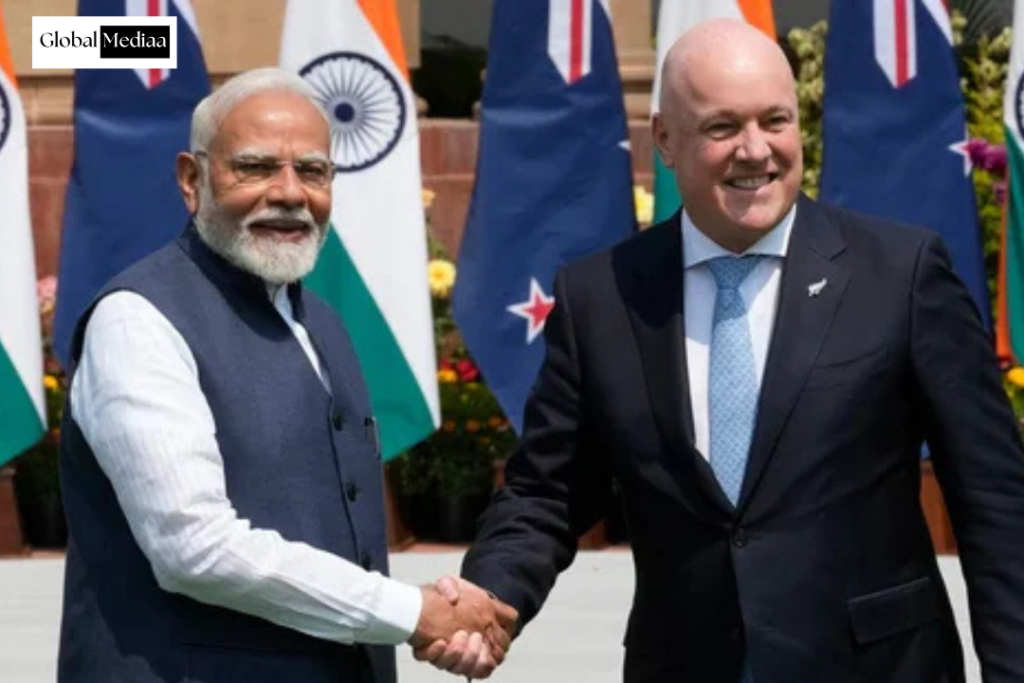
New Zealand’s PM Christopher Luxon, on Saturday, praised the free trade agreement with India, saying that the deal fulfilled a key promise made by his government.
“We said we’d secure a Free Trade Agreement with India in our first term, and we’ve delivered.” He further added that this “landmark deal means more jobs, higher incomes and more exports by opening the door to 1.4 billion Indian consumers.”
With the strong and credible foundation provided by the FTA, both leaders express confidence in doubling bilateral trade over the next five years as well as an investment of $20 billion in India from New Zealand over the next 15 years, it added. The leaders also welcomed the progress achieved in other areas of bilateral cooperation, such as sports, education and people-to-people ties, and reaffirmed their commitment to further strengthening the India-New Zealand partnership.
“India–New Zealand FTA,
that brings in $20 billion investment and offers lucrative opportunities for Indian innovators, entrepreneurs, farmers, MSMEs, students and youth will open new gateways to prosperity. It is a textbook example of how people-centric foreign policy is fulfilling the aspirations of citizens under PM Modi’s leadership (sic),” Union home minister Amit Shah said on X.
New Zealand Prime Minister Christopher Luxon supports the Free Trade Agreement (FTA) with India, calling it a “landmark accomplishment” that will boost jobs and incomes in New Zealand. The finalized deal faces opposition from Foreign Minister Winston Peters, who described it as a “bad deal”.
A few days ago,India signed a Free Trade Agreement (FTA) with New Zealand. Prior to this, India has already signed FTAs with Australia, the United Kingdom (UK), the UAE, the European Free Trade Association, Oman, and others. In international circles, this development is being viewed with some surprise: while India withdrew from the Regional Comprehensive Economic Partnership (RCEP) in November 2019 — an agreement that included both Australia and New Zealand — how has India now gone on to sign separate FTAs with these two countries?
The RCEP was a proposed comprehensive agreement, among 16 nations: the 10 ASEAN nations, Australia, New Zealand, Japan, South Korea, China, and India. Negotiations on this agreement continued for nearly eight years. It is widely believed that India chose to exit RCEP because the final draft of the agreement did not align with India’s expectations. While attending the RCEP summit on 4 November 2019, the Prime Minister made it clear that his conscience did not permit him to sign the agreement. He also stated that Mahatma Gandhi’s teachings inspired him to step away from the pact.

The question, therefore, is:
what forced the Prime Minister to withdraw from the agreement at the very last moment? Perhaps for the first time in the world, a head of government, after years of negotiations and even after the final draft had been prepared, announced before all other leaders at the summit that his country would not join the accord. This sparked global discussions about the issues on which India kept itself away from RCEP.(Edited)Restore original
For more such information, connect with us today: : www.globalmediaa.com