
BlueBird Block-2 mission: ISRO successfully launches LVM3-M6 rocket
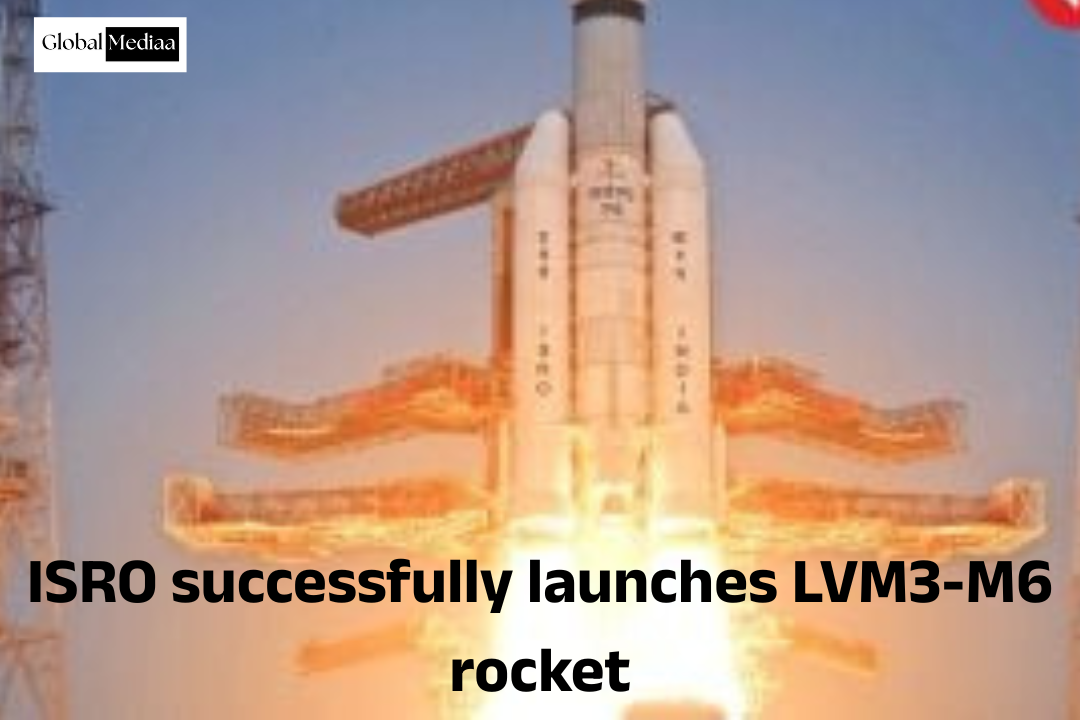
This is the largest commercial communications satellite ever deployed in low Earth orbit.
ISRO will launch the LVM3-M6 rocket with the BlueBird Block-2 mission on December 24, 2025.
The Indian Space Research Organisation’s (ISRO) Launch Vehicle Mark 3 (LVM3) on Wednesday (December 24, 2025) morning successfully placed the BlueBird Block-2 satellite in low earth orbit.
The Indian Space Research Organization ISRO on Wednesday released rare onboard camera footage from its heaviest rocket, LVM3-M6, offering a rocket’s-eye view of the BlueBird Block-2 mission from liftoff to satellite separation.
The footage shared by Isro on X features visuals captured by cameras onboard and documents each major phase of the ascent. The footage shows the rocket lifting off the second launch pad at the Satish Dhawan Space Center in Sriharikota, Andhra Pradesh, followed by the separation of the twin S200 solid strap-on boosters. It then captures the separation of the L110 liquid core stage and the jettisoning of the payload fairing, before concluding with the successful separation of the BlueBird Block-2 satellite into Low Earth Orbit.
The Indian Space Research Organization (ISRO) on Wednesday (December 24) successfully launched the LVM-3 rocket that placed the BlueBird Block-2 communication satellite into orbit. Designed by the US company AST SpaceMobile, the satellite, weighing nearly 6,100 kg, is the ‘heaviest satellite ever lifted from Indian soil using an Indian launcher’. The successful launch established India’s expanding role in the global commercial launch market
India’s space agency has successfully carried out a historical mission to place its heaviest-ever satellite into orbit. On Wednesday (December 24), the Indian Space Research Organization ISRO launched the LVM-3 rocket carrying the BlueBird Block-2 communication satellite.
Weighing 6,100 kg, this was the “heaviest satellite ever lifted from Indian soil using an Indian launcher,” according to Isro Chairman V Narayanan. Prime Minister Narendra Modi also hailed the successful launch, calling it “a significant stride in India’s space sector.”
He said this “strengthens India’s heavy-lift launch capability and reinforces our growing role in the global commercial launch market.”
Isro’s LVM3-M6 mission
ISRO‘s ‘Baahubali’ rocket, the Launch Vehicle Mark-III (LVM-3), lifted off from the Satish Dhawan Space Station in Andhra Pradesh’s Sriharikota at 8:55 am on Christmas Eve to place the BlueBird Block-2 communication satellite of the US-based AST SpaceMobile into orbit.
This was the largest-ever commercial communications satellite deployed in low Earth orbit (LEO) by Isro’s LVM-3 rocket.
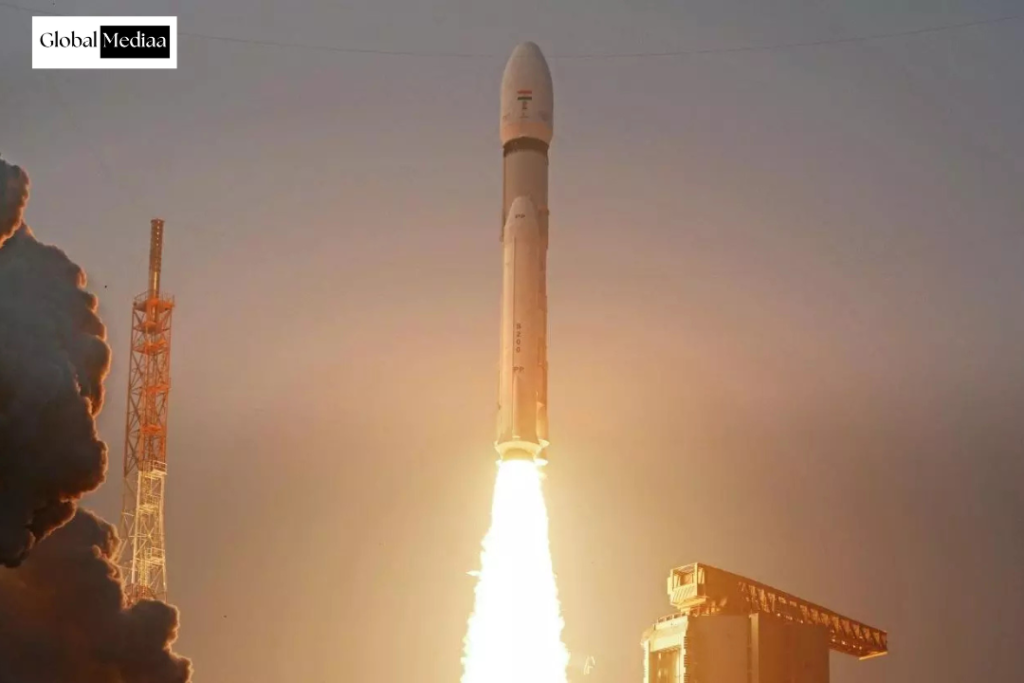
Lauding the successful launch, Isro Chairman V Narayanan said, “[The] launch vehicle has successfully and precisely injected the BlueBird Block 2 communication satellite in the intended orbit. This is the first dedicated commercial launch for a customer from the USA, that is AST SpaceMobile… This is our 104th launch from Sriharikota, also the ninth successful mission of the LVM-3 launch vehicle, demonstrating its 100 per cent reliability.”
After about 15 minutes of takeoff, the spacecraft Bluebird Block-2 separated from LVM3–M6 and was injected into an orbit of around 520 km.
As per the space agency, the Bluebird Block-2 communication satellite was the heaviest payload carried by the 43.5 meter tall LVM3 rocket to be placed into Low Earth Orbit (LEO). It is an orbit that is closer to Earth’s surface, usually at an altitude of less than 1,000 km.
Prior to this, Isro successfully launched LVM3-M5 Communication Satellite 03, weighing about 4,400 kg, in the Geosynchronous Transfer Orbit (GTO) on November 2.
What’s the BlueBird Block-2 satellite?
The BlueBird Block-2 is a next-generation communication satellite which aims to provide high-speed cellular broadband directly to smartphones.
Designed by the American company AST SpaceMobile, it is part of a global LEO constellation to provide direct-to-mobile connectivity via satellite.
Unlike conventional communication satellites that beam their signals through specialized ground stations, this constellation is equipped to directly communicate with the telephones.
The satellite will enable 4G and 5G voice and video calls, texts, streaming and data for “everyone, everywhere, at all times,” as pe r Isro.
AST SpaceMobile is also working on what it says will be the first space-based cellular broadband network that will be accessible directly via standard smartphones, without the need for special devices. “We are on a mission to eliminate the connectivity gaps faced by today’s nearly six billion mobile subscribers and bring broadband to the billions who remain unconnected,” the US company wrote on its website.
Why the BlueBird Block-2 mission matters to Isro
The BlueBird Block-2 mission was the third time involving ISRO‘s launch vehicle LVM-3 to inject a satellite into LEO. The LVM3-M6 is the sixth operational flight of the space agency’s Baahubali rocket, which brings India’s expanding role in commercial space launches into the spotlight.
“This is a back-to-back mission of the LVM-3 in just 52 days… This is the heaviest satellite ever lifted from Indian soil using an Indian launcher. This is also the third fully commercial mission of LVM-3 and the vehicle has demonstrated its excellent track record,” said the Isro chairman.
LVM-3 is a three-stage launch vehicle consisting of two solid strap-on motors (S200), a liquid core stage (L110), and a cryogenic upper stage (C25). Isro has used the rocket
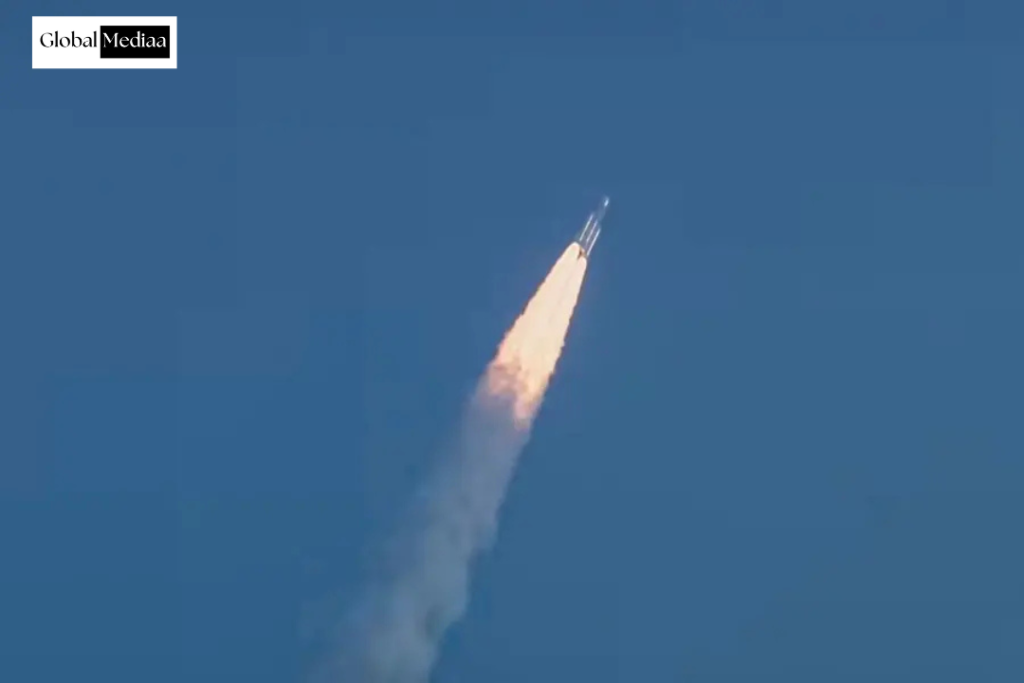
for major missions like Chandrayaan-2 and Chandrayaan-3.
A modified version of the LVM-3 rocket will be deployed in the Gaganyaan mission, India’s first human space flight programme.
Previously, the LVM-3 was used for the launches of 36 satellites of OneWeb, a broadband satellite internet service provider, in 2022 and 2023.
The LVM-3 is one of the heaviest launch vehicles on the market, along with SpaceX’s Falcon-9 and the European Space Agency’s (ESA) Ariane 6.
The BlueBird Block-2 launch shows Isro’s ability to carry out such heavy launches at a lower cost, as per the Indian Express.
After 2023, this was the second time two LVM-3 missions were launched in a single year.
Before the BlueBird Block-3 mission, Isro’s heaviest payload was a set of OneWeb satellites, with a total weight of more than 5,700 kg, injected into LEO.
The space agency is making efforts to introduce redundancies to the LVM-3 launch vehicle to ensure that it is safe for humans for the Gaganyaan mission. It is also increasing its lift-off capacity to carry the modules for the Bharatiya Antariksh Station, India’s own home-built space station.
The LVM3-M6 / BlueBird Block-2 Mission is a dedicated commercial mission aboard the LVM3 launch vehicle, which will launch the BlueBird Block-2 communication satellite of AST SpaceMobile, USA. This mission marks the 6th operational flight of LVM3.
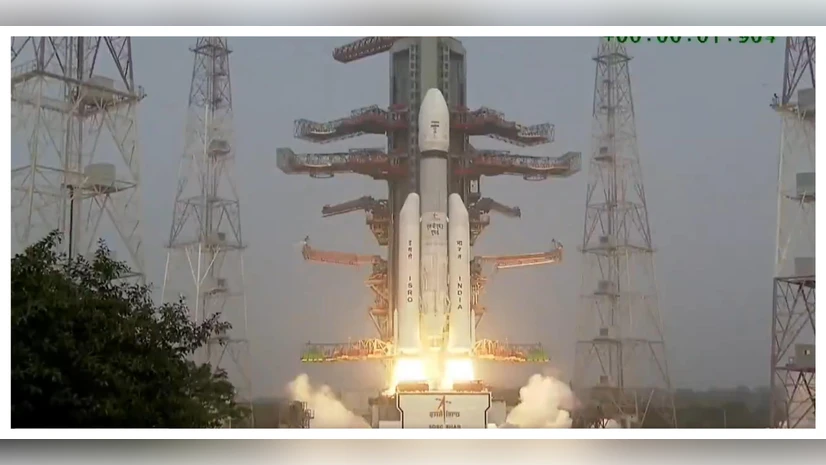
LVM3, developed by ISRO,
is a three-stage launch vehicle consisting of two solid strap-on motors (S200), a liquid core stage (L110), and a cryogenic upper stage (C25). It has a lift-off mass of 640 tonnes, a height of 43.5 m, and a payload capability of 4,200 kg to Geosynchronous Transfer Orbit (GTO). In its earlier missions, LVM3 has successfully launched Chandrayaan-2, Chandrayaan-3, and two OneWeb missions carrying 72 satellites. The previous launch of LVM3 was the LVM3-M5/CMS-03 mission, which was successfully accomplished on November 02, 2025.
In this mission,LVM3-M6 will place the BlueBird Block-2 satellite, into the Low Earth Orbit and is the largest commercial communications satellite to be deployed in the Low Earth Orbit. It will also be the heaviest payload to be launched by LVM3 from Indian soil. The satellite is part of the next generation of BlueBird Block-2 communication satellites, designed to provide space-based cellular broadband connectivity directly to standard mobile smartphones.
For more such information, connect with us today: : www.globalmediaa.com